Herculaneum  Tickets

Guide to visiting Herculaneum & Pompeii: Together vs Apart

Visiting both Pompeii and Herculaneum in one day is the best way to understand the 79 AD eruption, but planning it on your own often means buying two tickets separately, timing two entrances, and figuring out the transfer between the sites. That’s time spent coordinating, not exploring.

The solution

A Pompeii + Herculaneum combo keeps the day simple and connected. You start at Pompeii, then continue to Herculaneum without worrying about separate queues or schedules. Explore each site at your own pace, and if needed, you can add transfers from Pompeii or Naples, or join an onsite guided tour for context.

See the scale, then the detail

Pompeii shows the rhythm of a Roman city with its streets, gathering spaces, and daily routines. Herculaneum brings the focus closer, preserving private rooms, interiors, and the details of home life. Together, they complete the narrative.

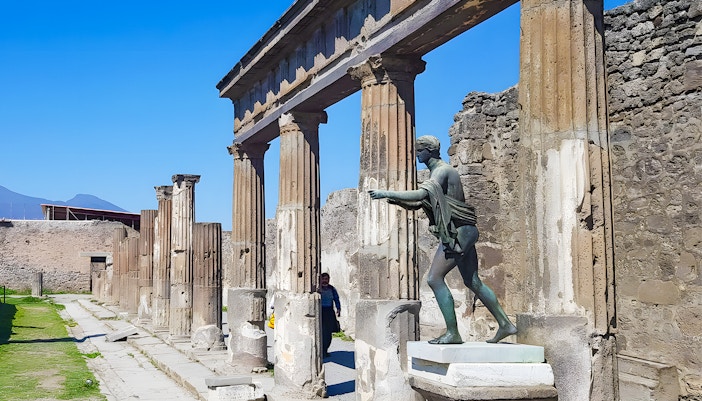
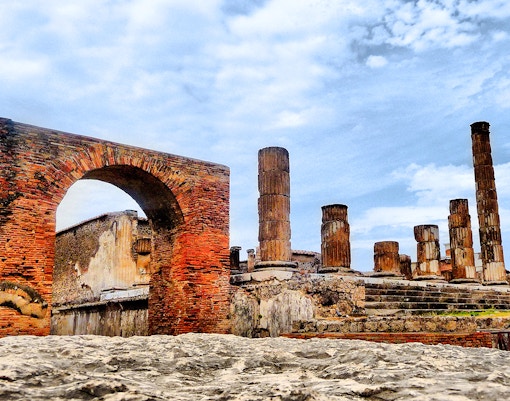
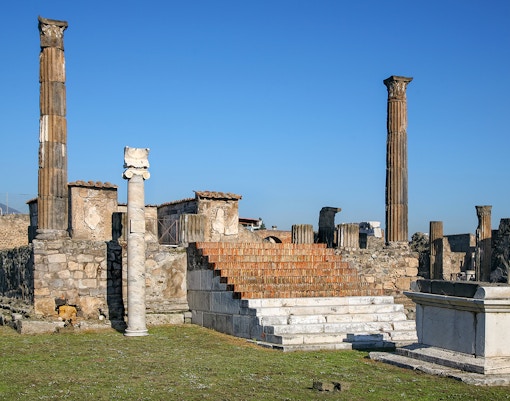
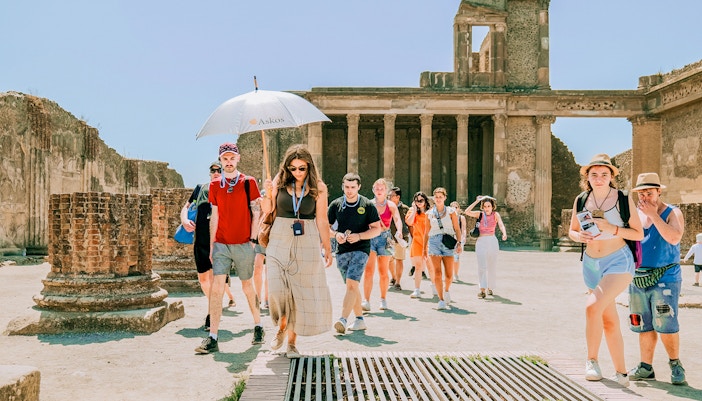
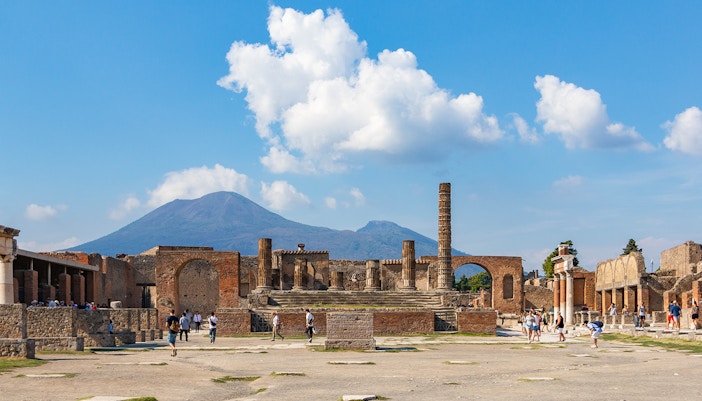
Pompeii ruins with ancient brick arch and stone columns under a blue sky.

Pompeii vs Herculaneum: Why combine both?

FeaturePompeiiHerculaneumWhy combine both

Experience type

Open-air Roman city with streets, public squares, and large structures

Compact site with exceptionally preserved interiors and household details

See the eruption’s impact at both city scale and home level

Time needed

2–4 hours

1–2 hours

Works naturally as a single-day itinerary

Crowd level & navigation

Can be busy, larger area to walk

Generally quieter, easier to explore

A combined visit balances pace, scale, and comfort

Unique highlight

The Forum, theaters, bathhouses, and wide streets

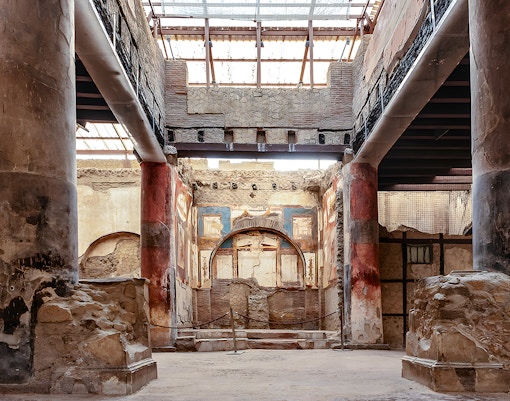
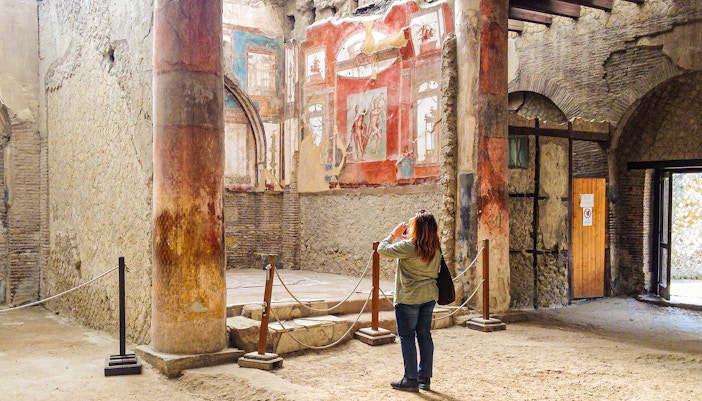
Upper floors, wooden beams, and intricate frescoes

Each site completes what the other cannot show alone

Preservation style

Surfaces and spaces exposed to the volcanic ash

Details sealed and carbonized by pyroclastic flow

Provides context + detail for the same historical moment

Who is this ideal for?

This pairing is perfect for first-time visitors, history lovers, and curious travelers who want a fuller picture of life before and after the eruption, without rushing. Seeing Pompeii first provides the broad city layout, while Herculaneum brings the details into focus. It’s comfortably done in one day, and if you prefer a more relaxed pace, you can always split the visits across two days. You can choose to include guided tours or transfers, depending on how structured you prefer your day to be.

Suggested itineraries for your day trip to Herculaneum

Entry tickets combo

Best for: Independent travelers, flexible pacing, relaxed exploration
Duration: 1 day or split over 2 days

If doing in one day:

  • 9am — Arrive at Pompeii (Circumvesuviana train → Pompei Scavi – Villa dei Misteri stop; entrance is 2 mins away)
  • 9:15am–12pm — Explore Pompeii highlights
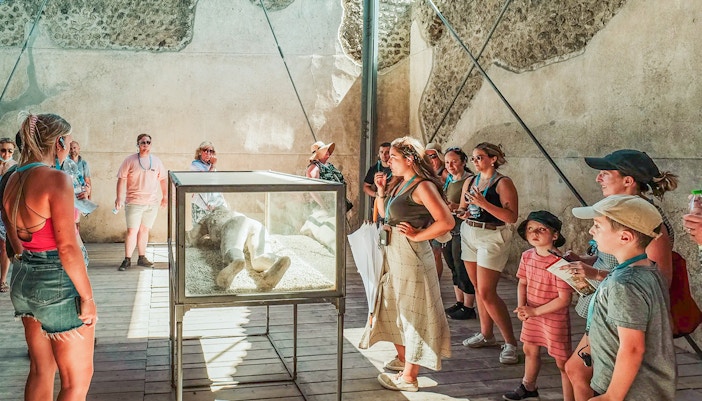
    Forum, Baths, Amphitheater, plaster casts
  • 12:15pm — Take Circumvesuviana to Ercolano Scavi (approx. 20 minutes)
  • 1pm–2pm — Lunch near Herculaneum
  • 2:10pm–3:45pm — Visit Herculaneum
    Wooden beams, upper floors, boathouses, frescoes
  • 4pm — Return via train to Naples/Sorrento

If splitting across two days:
Do Pompeii Day 1 and Herculaneum Day 2 to avoid fatigue and go deeper.

Why it works:
You control timing & pacing; train links are simple and frequent.

Pro tip:
Start with Pompeii (larger site = more energy needed), then enjoy Herculaneum’s smaller scale comfortably afterward.

Recommended tours:

Combo: Pompeii + Herculaneum tickets
From Pompeii: Guided Tour with Transfers

Best for: Travelers already staying in or near Pompeii, low-effort planning
Duration: ~6 hours

  • 9am — Meet your guide at Pompeii
  • 9:15am–11:45am — Guided Pompeii tour
    A curated route through major highlights and lesser-known corners
  • 12pm–1pm — Lunch break in Pompeii
  • 1pm — Transfer to Herculaneum (included)
  • 1:30pm–3pm — Guided Herculaneum visit
    See preserved wood beams, frescoes, mosaic floors, and boathouse remains
  • 3pm — Return transfer to Pompeii

Why it works:
No scheduling transport yourself. A single visit connects the narrative → seeing the scale at Pompeii & detail at Herculaneum makes the story click.

Pro tip:
Pro tip: Save more energy for photos in Herculaneum, the colors, wood, and details capture better than in Pompeii’s wide open ruins.

Recommended tours:

From Pompeii: Pompeii + Herculaneum Guided Tour with Transfers

From Naples: Guided Tour with Transfers

Best for: First-time visitors, short-stay travelers, cruise stop passengers
Duration: Full day (approx. 7–8 hours)

  • 8am–8:30am — Pickup from central Naples
  • 9am–11:30am — Guided tour of Pompeii
    Walk the streets of a once-thriving Roman city with expert context.
  • 12pm–1pm — Lunch break at Pompeii
  • 1:15pm — Transfer to Herculaneum
  • 1:45pm–3:15pm — Guided tour of Herculaneum
    See remarkably preserved homes, frescoes, and wooden structures up close.
  • 3:30pm — Return to Naples

Why it works:
Everything is coordinated, transportation, pacing, and route, so you don’t have to manage trains or timings between sites. Ideal for travelers who want the full experience handled smoothly and efficiently.

Pro tip:
Pick a tour that starts early, mornings in Pompeii are cooler and noticeably less crowded, making the experience more comfortable and focused.

Recommended tours:

From Naples: Pompeii + Herculaneum Guided Tour with Transfers

Top things to see at Herculaneum and Pompeii

Herculaneum

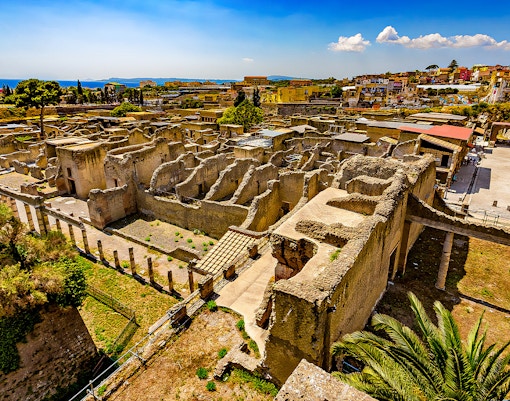
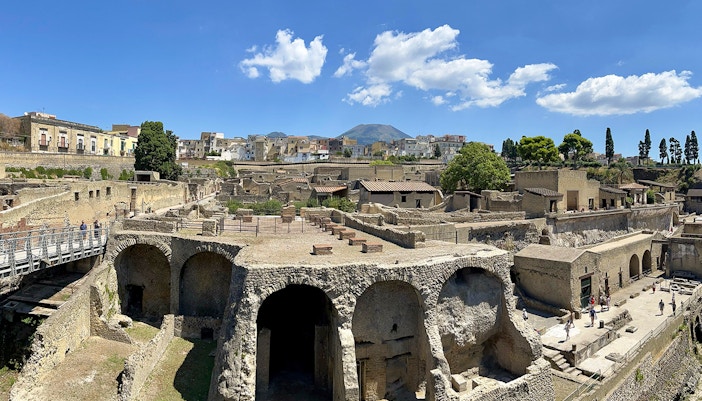
Stroll through a compact, well-preserved town with intact wooden structures, frescoed villas, upper floors, and intricate household details that reveal Roman daily life.

Access: ✅ Included

Book Herculaneum tickets and tours

House of Neptune

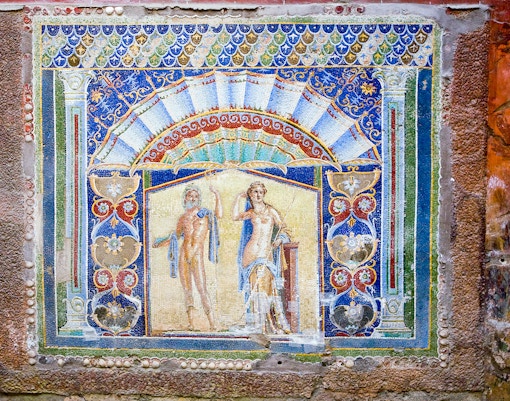
Famous for its vibrant frescoes depicting Neptune and marine scenes, offering a glimpse into Roman artistic and religious life.

Access: ✅ Included
Location: Herculaneum Archaeological Park

Villa of the Papyri

A luxurious villa known for its preserved scrolls, mosaics, and layout; one of the finest examples of Roman private residences.

Access: ✅ Included
Location: Herculaneum Archaeological Park

Boat houses

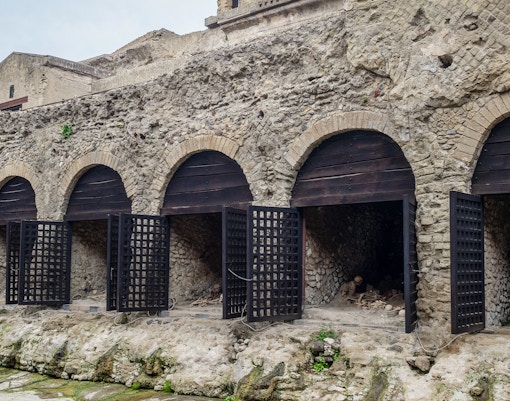
Located along the ancient coastline, these structures reveal maritime activity and how the eruption preserved the town’s waterfront.

Access: ✅ Included
Location: Herculaneum Archaeological Park

Public baths

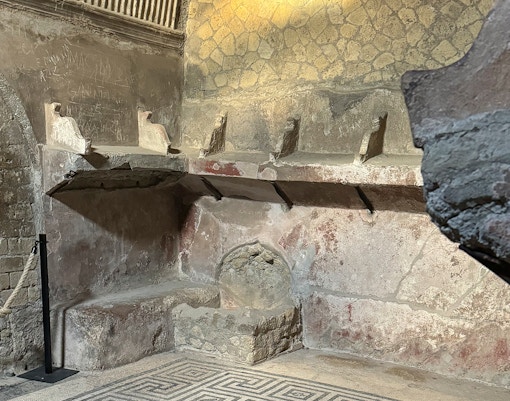
A communal space showcasing Roman bathing culture, heating systems, and social life; compact yet remarkably preserved.

Access: ✅ Included
Location: Herculaneum Archaeological Park

College of the Augustales

Religious site dedicated to the imperial cult, with altars and inscriptions highlighting worship practices in Herculaneum.

Access: ✅ Included
Location: Herculaneum Archaeological Park

Pompeii

Walk through bustling streets and marketplaces, explore public forums, theaters, and private homes, and admire mosaics, frescoes, and statues preserved by the eruption.

Access: ✅ Included

Book Pompeii tickets & tours

The Forum & Temple of Apollo

Pompeii’s civic and religious heart, framed by Mount Vesuvius in the backdrop. Accessible with all entry tickets. Best viewed early morning for fewer crowds.

Access: ✅ Included
Location: Pompeii Archaeological Park

Amphitheatre of Pompeii

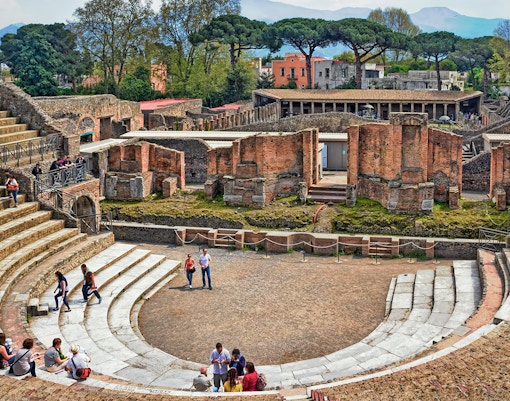
One of the oldest surviving Roman amphitheaters, offering insight into gladiatorial games and public spectacles. Avoid midday for better lighting and fewer visitors.

Access: ✅ Included
Location: Pompeii Archaeological Park

Villa of the Mysteries

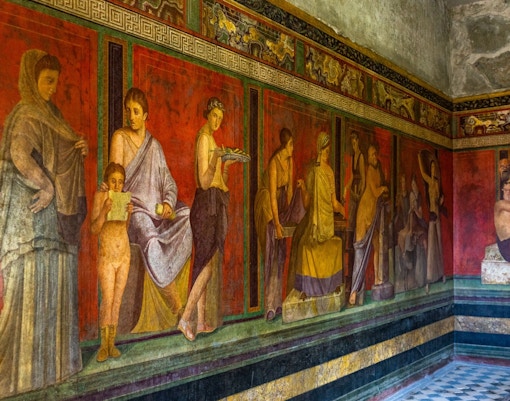
Famous for its intact frescoes depicting mysterious Dionysian rites, a must-see for art and history lovers.

Access: ✅ Included
Location: Pompeii Archaeological Park

Stabian baths

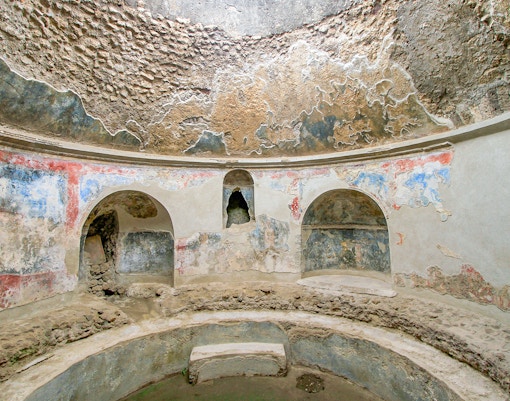
A large bath complex showcasing Roman engineering, social culture, and daily life rituals. Visit in the morning to enjoy cooler temperatures.

Access: ✅ Included
Location: Pompeii Archaeological Park

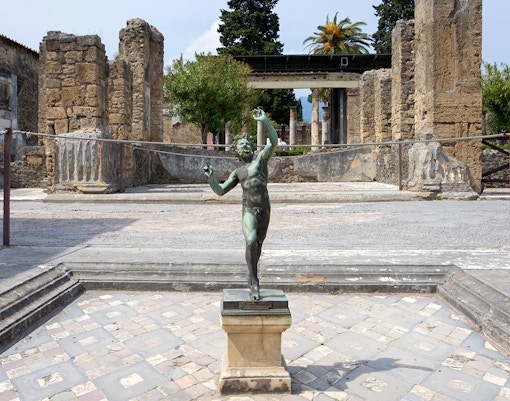
House of the Faun

One of the largest private residences in Pompeii, known for its mosaics, open atrium, and luxurious layout.

Access: ✅ Included
Location: Pompeii Archaeological Park

Getting from Pompeii to Herculaneum

Travel Time: Roughly 45 minutes

  • Board the L44088 towards Napoli Porta Nolana from the Pompeii Santuario station.
  • Get down at the Ercolano Scavi station, from where the archeological park is 6-8 minutes away by walk.

Duration: 19 minutes

  • Get on the A3/E45 fromSS 18 Tirrena Inferiore/SR18.
  • Follow the A3/E45 toVia Cupa Monti in Ercolano. Take the exit to Ercolano Scavi from A3/E45.
  • Continue on Via Cupa Monti. Take Via A. Bordiga and Via A. Moro to SS 18 Tirrena Inferiore/SR18.
  • Park at the municipal parking lot at Viale de Papiri Ercolanesi or any of the other unguarded spots near Herculaneum.

Frequently asked questions about Herculaneum and Pompeii tours

Both offer unique insights into ancient Roman life, and one isn’t necessarily ‘better’ than the other per se. Herculaneum’s ruins are better preserved, offering an intimate insight into luxurious lives well-lived until they abruptly came to a halt. It almost feels like the residents would return to their still-standing houses. In contrast, Pompeii’s destruction is more evident — most houses have lost their second and third floors, frescoes and statues have faded over the course of time, and human casts showcase the victims’ last moments of agony and helplessness. Both equally paint a picture of preserved, ongoing loss that is haunting.

More reads

Guided tours

Day trips

Plan your visit