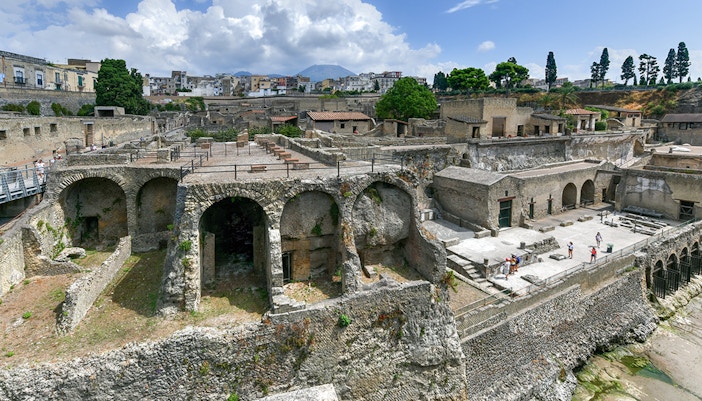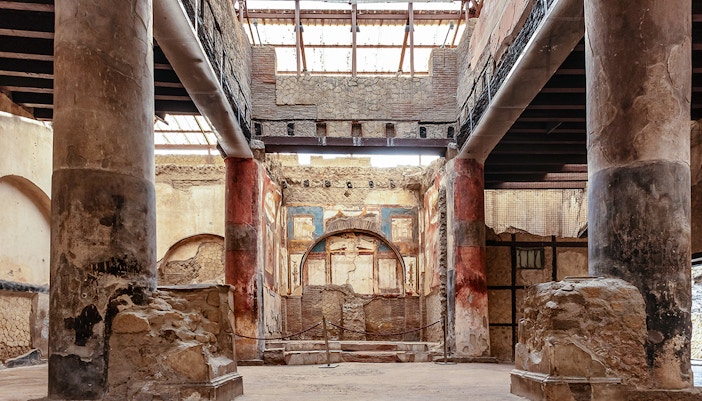









Aim for the first entry slot on a weekday, ideally 8:30am–10am. Light reaches the house more cleanly, and fewer groups crowd the doorway and atrium view. By late morning, you may need to wait for a clear look inside.
Included with Herculaneum tickets
Timings
RECOMMENDED DURATION
2 hours
Alan B
+7 more
Rasmus H
Michael D
Luiz M
+6 more
Vanessa P
+1 more
Luigi S
+1 more
Jenna W
Franck H
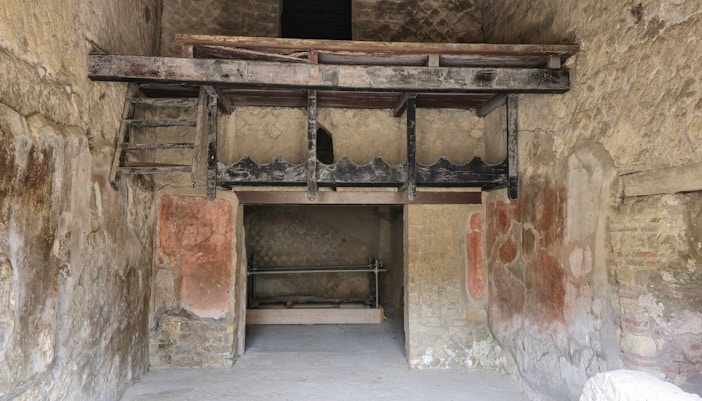
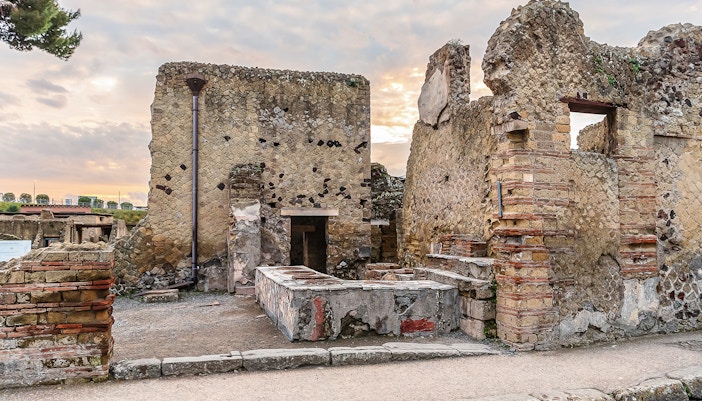
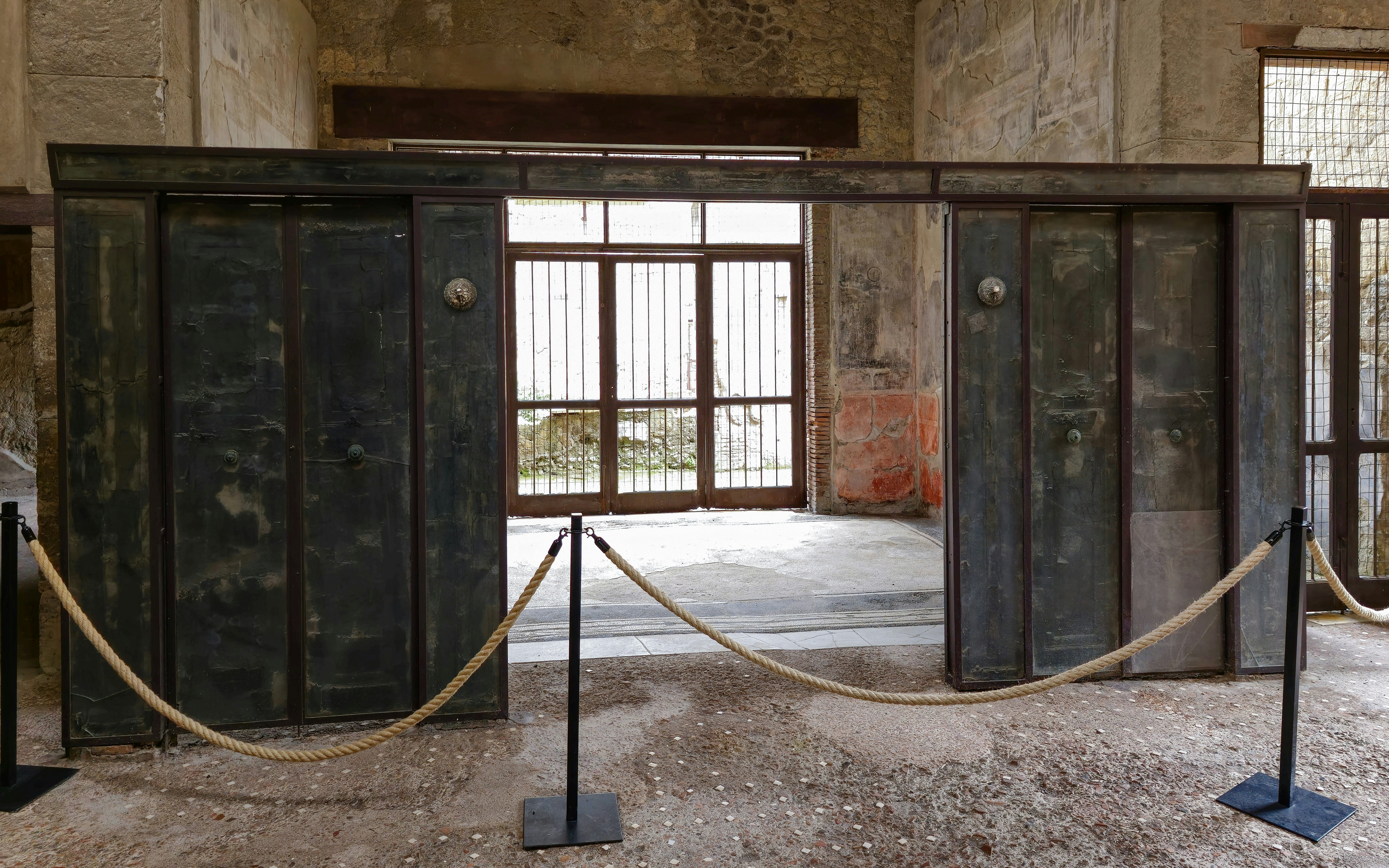
The House of the Wooden Partition is included with all Herculaneum tickets. No separate ticket is needed. Its name comes from the carbonised wooden screen still standing in the atrium, a folding partition that once separated the entrance hall from the inner rooms. Wood like this almost never survives from antiquity, but the volcanic surge that buried Herculaneum in 79 AD charred and sealed it rather than destroying it, leaving the timber, along with original doorframes and even a wooden bed, intact nearly two thousand years on. The house gives a vivid sense of how a comfortable Roman family actually lived.
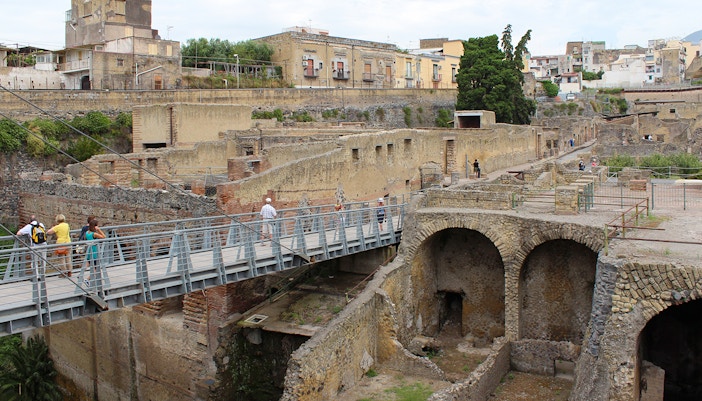
You’ll usually reach it in the central residential part of the archaeological park after entering the main site and following the open streets downhill; it is not a separate stop, so you can pass it by if you’re rushing. Book a guided tour or an audio guide ticket if you want the preserved timber details explained rather than just photographed.
Aim for the first entry slot on a weekday, ideally 8:30am–10am. Light reaches the house more cleanly, and fewer groups crowd the doorway and atrium view. By late morning, you may need to wait for a clear look inside.
Plan 10–15 minutes self-guided, or 15–20 minutes with a guide. That gives you time to study the wooden screen, roof timbers, and room layout. If you only glance in, the house can feel like just another doorway.
Treat it as a first-half stop, not a final add-on. Most visitors reach it 30–60 minutes after entering if they follow the central streets at a steady pace. Don’t spend all your attention early and then rush this house.
Crowds build from about 11am–1pm, when Naples transfers and guided departures are fully inside the site. The doorway can bottleneck, which makes it harder to read the partition’s depth and sightlines. Earlier visits usually give you cleaner views.
Stand at the atrium entrance first, then focus on the carbonized folding partition and the timber above it. If time is tight, skip lingering in less-preserved houses elsewhere and give this one a deliberate stop instead.
Most visitors photograph the partition quickly and miss what it did: it controlled privacy between the atrium and tablinum. Look up as well as ahead, and don’t judge the house only from the threshold if the interior feels dim.
| Ticket type | Why choose it |
|---|---|
Timed entry | Best for flexible explorers who want to find the house at their own pace and spend extra time on Herculaneum’s residential streets. |
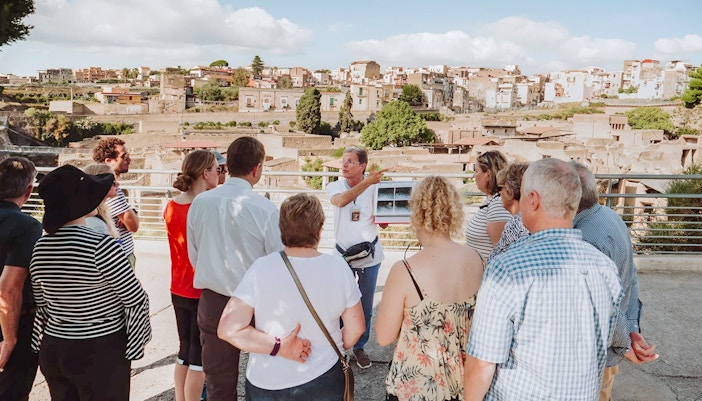
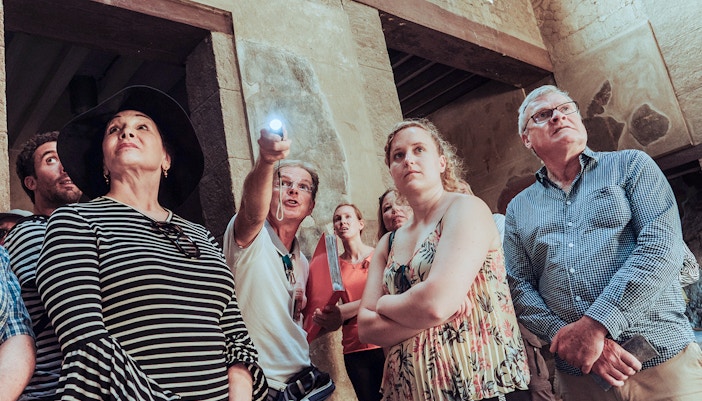
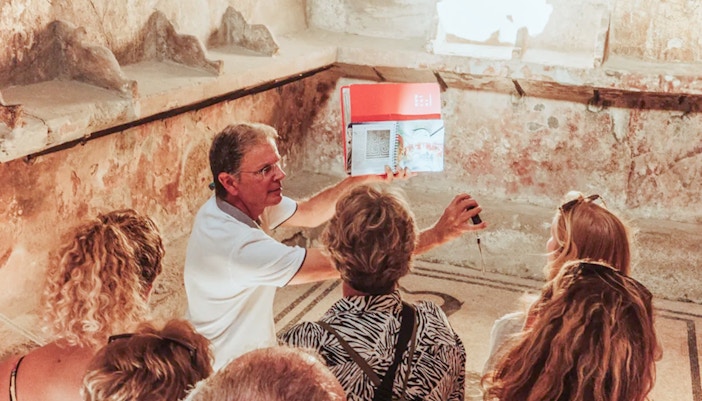
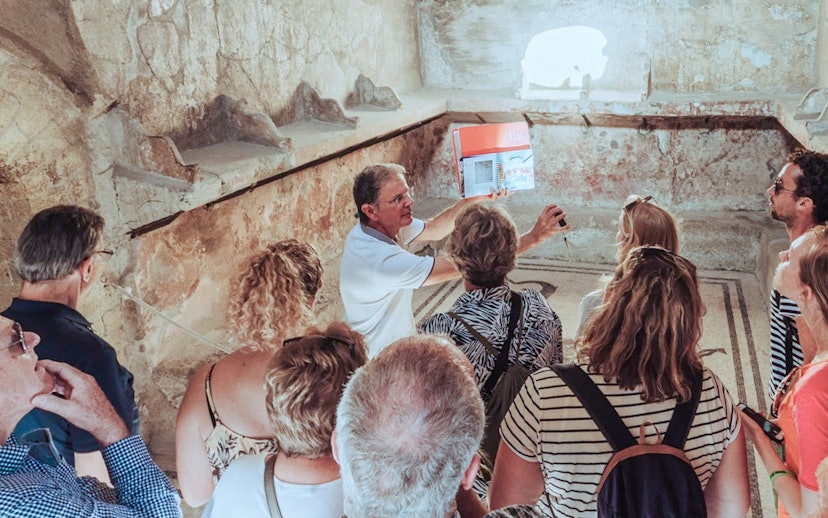
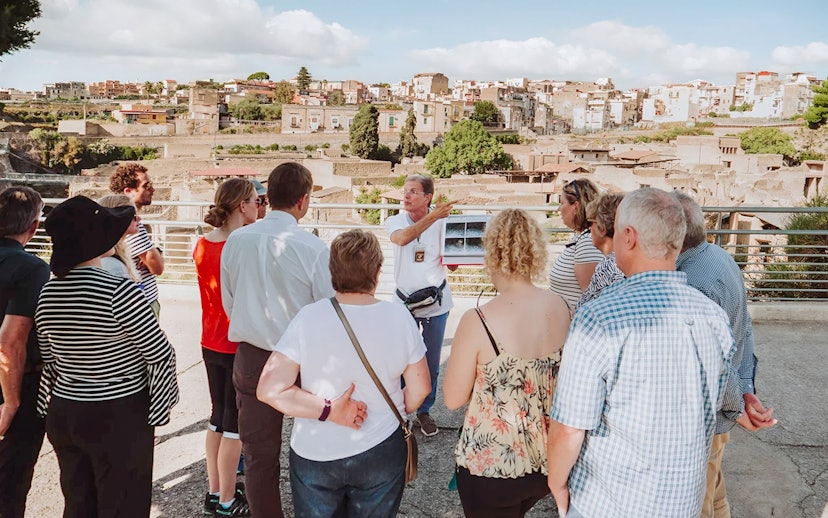
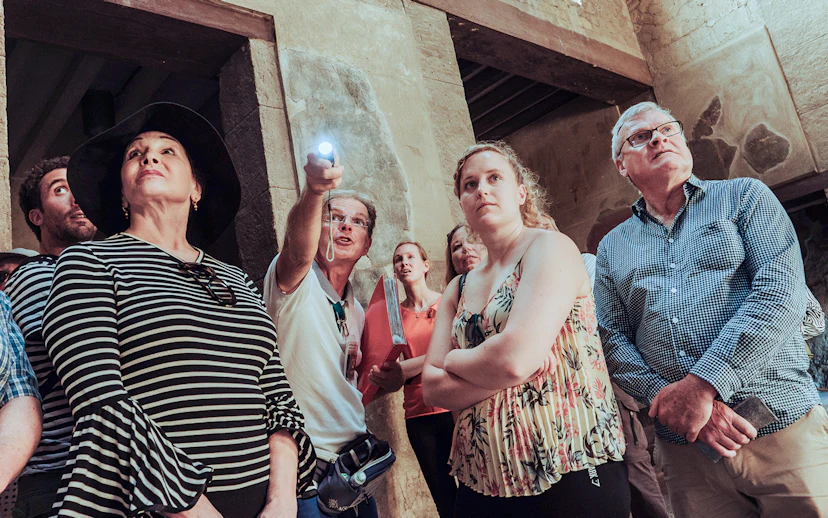
Guided tour with an archaeologist | Best if you want the wooden partition, room hierarchy, and preservation story explained in context, not just pointed out. |
Entry with official audio guide | Best if you want self-guided freedom but still need help understanding why this house matters within Roman domestic life. |
What makes this house irreplaceable inside Herculaneum is simple: it preserves actual Roman domestic wood, not just the masonry around it. Most visitors expect frescoes and mosaics here; few expect a carbonized folding room divider still showing how a wealthy home controlled privacy and status. Use this stop to read the house as a lived interior, not a ruin. These highlights tell you exactly where to look once you’re inside.
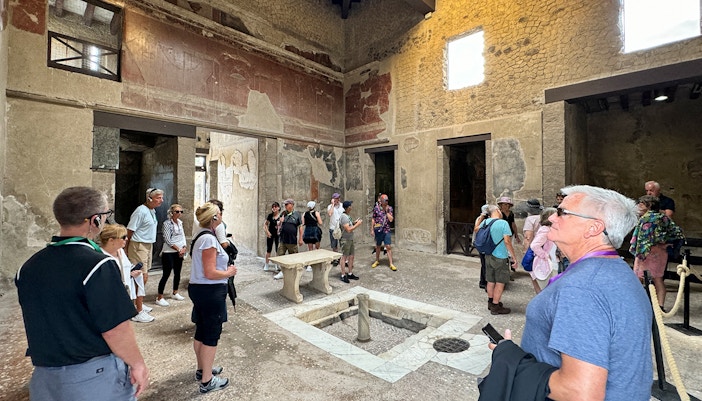
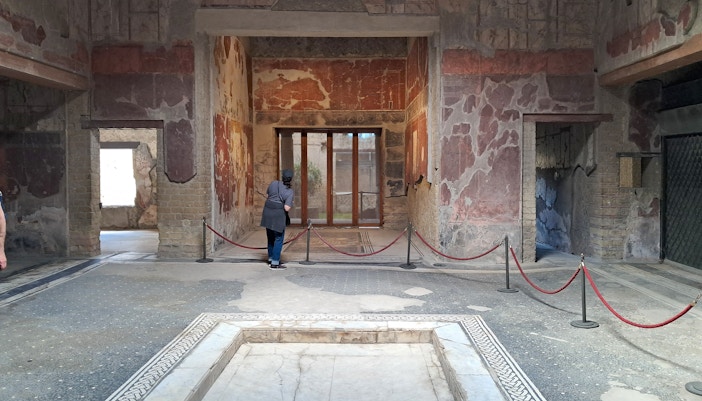
From the atrium entrance, look toward the tablinum and focus on the dark wooden screen between the spaces. This is the house’s defining feature. It shows how Roman homes could open, divide, and control sightlines inside a reception room.
Before you move on, raise your eyes to the carbonized beams above the atrium. Herculaneum preserved timber unusually well, and this overhead view changes the house from a floor plan into a three-dimensional interior with real structure.
Pause along the central line of the house and notice how one room leads the eye into the next. The layout was designed for display and access control. That makes the surviving partition more meaningful than an isolated object in a museum.
Yes. Entry is included with every valid Herculaneum ticket. No separate ticket exists.
No. Any Herculaneum ticket gets you in. Guided tours and official audio guide tickets simply make the house easier to understand.
No. It has no independent entrance and sits inside the archaeological park. You must enter Herculaneum and follow the open visitor route.
Usually in the first half of the visit. Allow about 30–60 minutes from the entrance, depending on your route and stops.
Plan 10–15 minutes self-guided, or 15–20 minutes with a guide. The preserved timber details reward a slower look.
Usually, yes. Many guided routes include it, especially archaeologist-led tours, but exact stops can change if conservation work closes parts of the site.
Yes. Few Roman houses anywhere preserve original wood this clearly, so it gives Herculaneum something Pompeii generally cannot.
Usually, yes. Avoid flash, tripods, and any setup that blocks doorways or risks contact with fragile surfaces.
Partly. Herculaneum has some accessible routes, but uneven paving and thresholds can limit close access to individual houses, including this one.
No, but it helps. Without context, most visitors see a dark wooden screen; with explanation, you see Roman privacy and household hierarchy.
Buried in minutes, preserved for millennia: explore this ancient port city with an archaeologist who knows its secrets firsthand.
Inclusions #
Access to Archaeological Park of Herculaneum with priority entry
2-hour guided tour of Herculaneum
Expert English, Spanish, French, German, or Italian-speaking archaeologist guide (as per option selected)
Private tour with an archaeologist guide (as per option selected)
Exclusions #
Herculaneum
Pompeii
Inclusions #
Skip-the-line entry to Pompeii
Timed entry to Herculaneum
Exclusions #
Transfers between sites
Guide
2 UNESCO sites in 1 day: Pompeii’s streets & Herculaneum’s villas, with a local expert and round-trip transfers.
Inclusions #
Day trip to Pompeii and Herculaneum
Round-trip AC coach/minivan transfers from Naples
Guided tour of Pompeii with skip-the-line entry
Guided tour of Herculaneum skip-the-line entry ticket
Expert English-speaking guide
Archeologist guide (as per option selected)
Lunch (as per option selected)
Exclusions #
Inclusions #
Day trip around Pompeii, Herculaneum & Vesuvius
Round-trip AC coach transfers from Naples
Skip-the-line entry to Pompeii Archaeological Park
Entrance ticket to Herculaneum Pompeii Archaeological Park
Access to Mt. Vesuvius National Park
Audio guide for Pompeii in English, Spanish, French, Italian and German
Map for Pompeii
Transfers between the sites
Lunch (as per option selected)
Exclusions #
Your group, your pace, your archaeologist. A fully private window into the Roman city Vesuvius sealed in an instant.
Inclusions #
Private tour of Herculaneum
Fast-track entry to Herculaneum
Expert English, French, Italian, or, Spanish, Portuguese, or German-speaking guide (as per option selected)
Maximum of 10 guests
Exclusions #