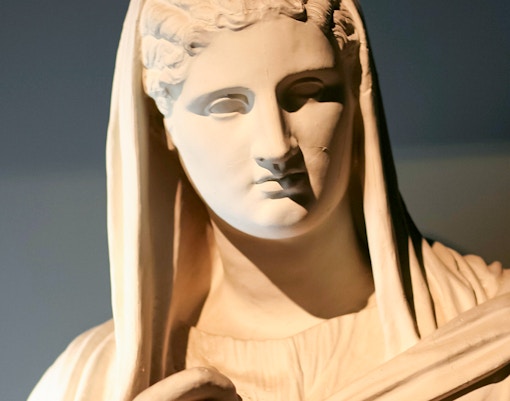
One of the early discoveries from the theater were the marble statues of two Herculaneum women, which were gifted by the Duke of D’Elbeuf to the Prince of Savoy. In the 18th century, Duke D’Elbeuf sanctioned further excavations of the theater. He sought to find other such treasures to decorate his residence.
Herculaneum theater | Gateway to discovering the ruins
What is the Herculaneum theater?
The ancient theater of Herculaneum was built circa 1st century AD during the reign of Augustus. It was built in the standard Roman fashion of the time — with three cavea (seating sections) corresponding to various social classes of the time. It had a seating capacity of approximately 2500 people, and was smaller in size compared to Pompeii’s theater. Although it was damaged in the earthquake of 62 AD, restoration efforts were made in its wake.
The discovery of Herculaneum as a lost civilization was made possible through a chance encounter with this buried ancient theater. Who stumbled upon the theater? What developments did this random discovery set in motion? Here are all your questions answered about the ancient Herculaneum theater, its discovery, use and present-day existence.
Highlights of the Herculaneum theater
Statues
Stage
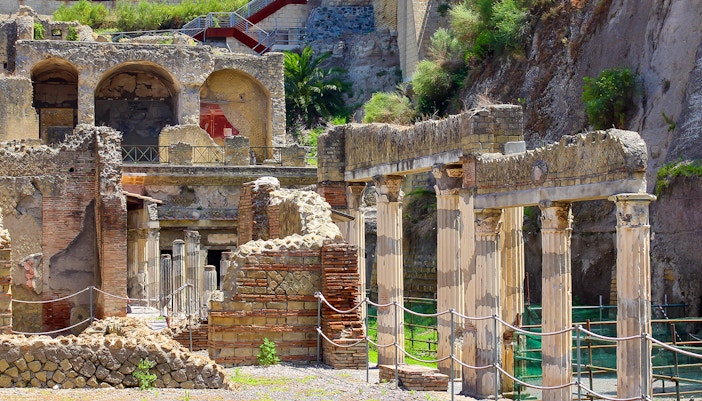
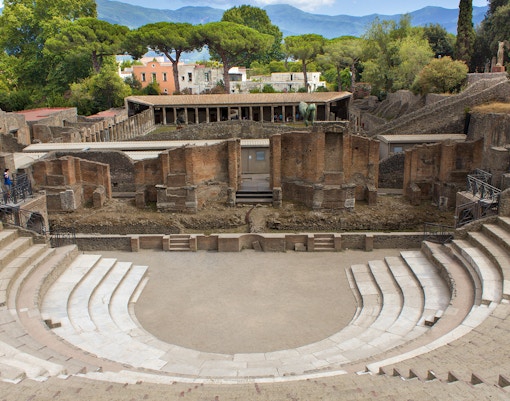
The stage was what was first discovered in the theater by accident in 1709. Now, it comprises two pylons built in the 18th century, post the discovery of the theater. There are ruined remains of the Scaenae Frons, or the raised columns behind the stage that framed the performers on stage. There’s also some remains of the Proscenium, or raised theater stage.
Interiors
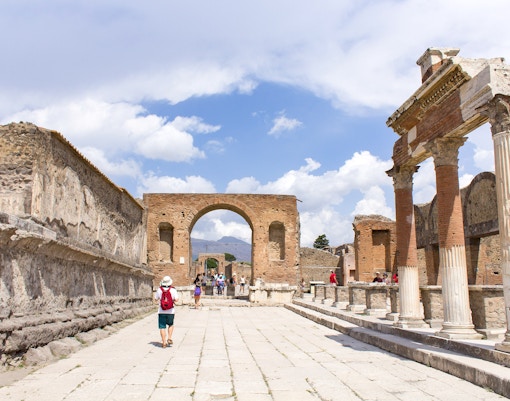
Descending into the depths of the theater requires squeezing through narrow tunnels and ducking down low arches. There are deposits of lime across the walls and columns with occasional water seepage, making the theater a slippery and dank place. In its heyday, however, the theater boasted marble walls, vivid frescoes and statues. Some of these statues are located in the Dresden Museum and the Archeological Museum of Naples today.
Inscriptions
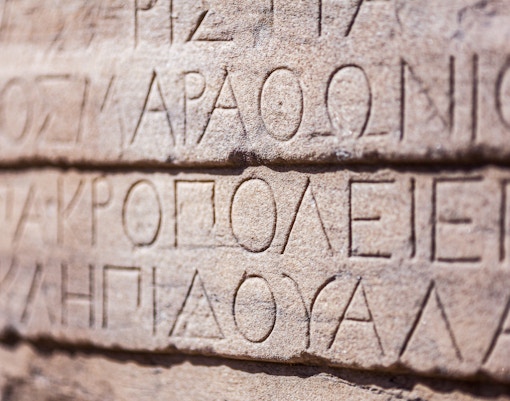
Two inscriptions are still legible inside the theater, although their accompanying statues have long been removed. One is dedicated to Marcus Nonius Balbo, the then governor of Crete and public beneficiary of Herculaneum. The other was dedicated to Appius Claudius Pulcher, Consul of the Roman Republic in 54 AD. Pulcher had a holiday retreat in Herculaneum.
Discovery of the Herculaneum theater
In 1709, Abrogio Nocerino, a farmer, was digging a well near the town of present-day Ercolano, when his ax struck something strange: a block of marble. Nocerino sold it to a man who was working for Prince d’Elbeuf, who was an Austrian army commander in Naples. Prince d’Elbeuf was determined to dig deeper to find more such treasures to decorate his home in nearby Portici.
Excavations ordered by Prince d’Elbeuf were motivated by greed and not genuine curiosity; over the next few years, the theater was systematically plundered and looted of its busts, friezes, columns and more.
It was not until Karl Weber, under Charles Bourbon, King of Spain that slightly more organized excavations of Herculaneum began. Even then, personal gain trumped academic interest — with the Bourbon residence showcasing many of the theater’s treasures.
The Herculaneum theater today
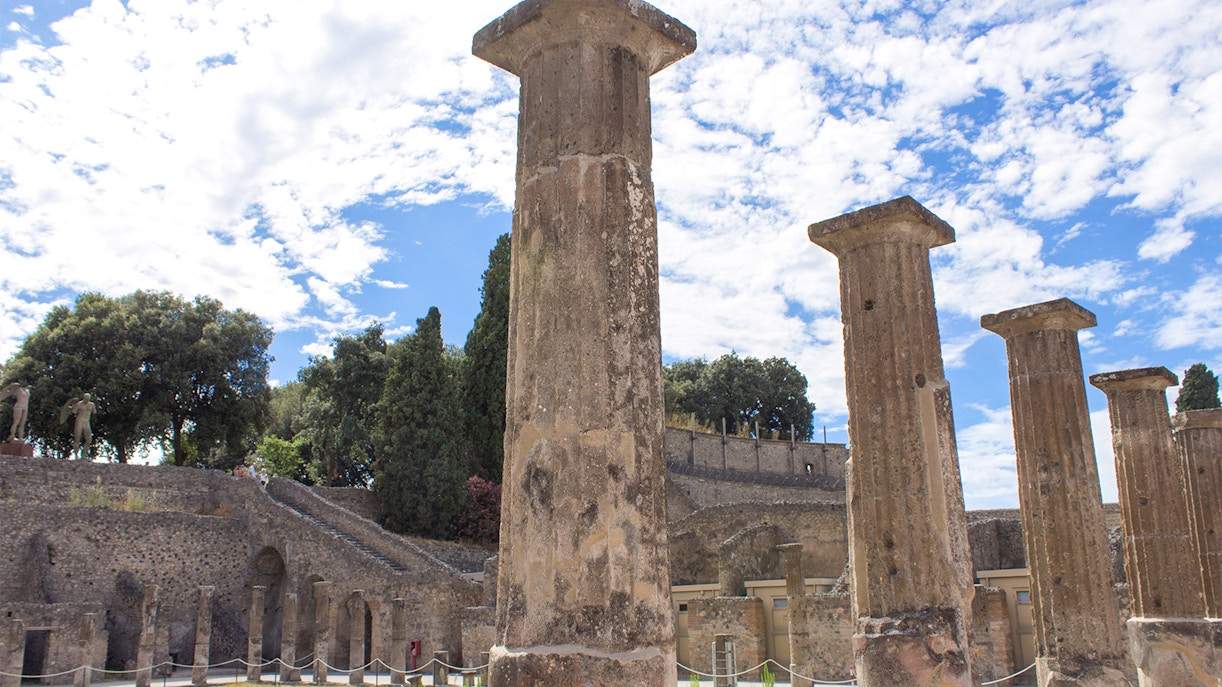
Presently, the theater is located outside the main excavation ruins, towards the north. Due to the nature and structure of excavations conducted across the 18th and 19th centuries, only a small portion of the theater is accessible, that too by descending underground. Visitors can access the theater through a building on Via Mare and take the same route as the 18th century explorers did — down a steep flight of stairs that’s cut through volcanic rock. However, tourists are not yet permitted to access the attraction, though the Ministry of Culture is planning to allow special-access tours on an experimental basis — starting this year.
Things to know before visiting the Herculaneum theater
- The descent into the theater is steep and slippery, so it’s best to wear appropriate footwear like sturdy shoes. This is also because there is seepage and stagnant pools of rainwater in places.
- If you’re claustrophobic, visiting the theater might not be the best idea as the inside is narrow and stuffy.
- When the theater does become accessible to the public, you can only tour it with a guide, and that too in groups of less than 10 members.
Frequently asked questions about the Herculaneum theater
No, the theater is not a public entertainment space. Large parts of it are still unexplored due to the density of the volcanic rock covering it. The little we can see of the theater today is only for guided visits and scientific study.
When bits of marble were accidentally discovered in the theater, royal families like Prince d’Elbeuf and later, King Charles of Bourbon had vested interests in the excavation. They wanted to fill their homes with the rich marble statues, busts, columns and stones from the theater, not really caring about the deeper significance of this find.
Once scientists and archeologists understood that there is likely an entire town buried beneath the neighboring areas of Portici and Ercolano, they approached excavation efforts with more care. Under Amadeo Maiuri in the 20th century, Herculaneum’s reclamation efforts were more scientific and sensitized to the ecology and geology of the region.
Excavation of the theater was initially approached carelessly and unscientifically, since the main motive was only to retrieve treasures. There were vertical tunnels drilled into the theater that destroyed many important frescoes and theater elements. It was only by the 19th century that efforts to drill laterally were introduced to preserve the ruins and disturb them as little as possible.
You can enter the theater today through a building on Via Mare. However, the theater is not formally open to the public yet — though sometime this year, the Ministry of Culture plans to permit small-group tours on an experimental basis.