Blast from the past: Uncovering Herculaneum history

There are many borrowed identities of Herculaneum: Pompeii’s lesser-known twin, the Roman God Hercules’ abode, Vesuvius’ city… Herculaneum may be all this, but it is also so much more, a stand-alone prize that asserts its own individuality. From gashed glory to renewed renown, Herculaneum has emerged from the ashes to occupy its own place in the annals of time. Here’s all you need to know about this beautiful city’s rich history and heritage.

All you need to know about Herculaneum

Timeline

  • 6th-7th century BC: Herculaneum was occupied by the Oscans, an Italic tribe.
  • 6th century BC: The Oscans were then replaced by the Greeks.
  • 4th century BC: Post the Greeks came the Samnites, another Italic people.
  • 89 BCE: Rome asserts dominance in Herculaneum after overthrowing the Samnite league in the Social War. Males of Herculaneum are now given Roman citizenship.
  • 62 AD: An earthquake strikes Herculaneum, a harbinger of the eruption.
  • 79 AD: Mount Vesuvius erupts, burying Herculaneum in a pyroclastic surge. Herculaneum lies buried for several centuries.
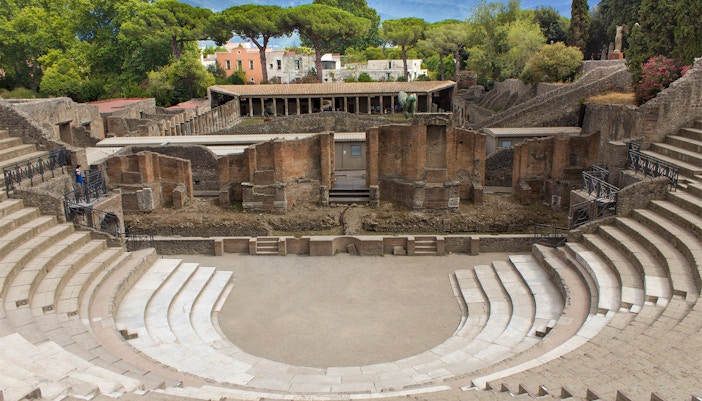
  • 1709-1828: A local farmer stumbles upon marble remnants from the Herculaneum theater while digging a well. A series of rulers henceforth action further excavations, although not in the most scientific manner.
    1924-1961: Amedeo Maiuri takes over the archeological work in Herculaneum, treating the site with the care it rightly deserves.
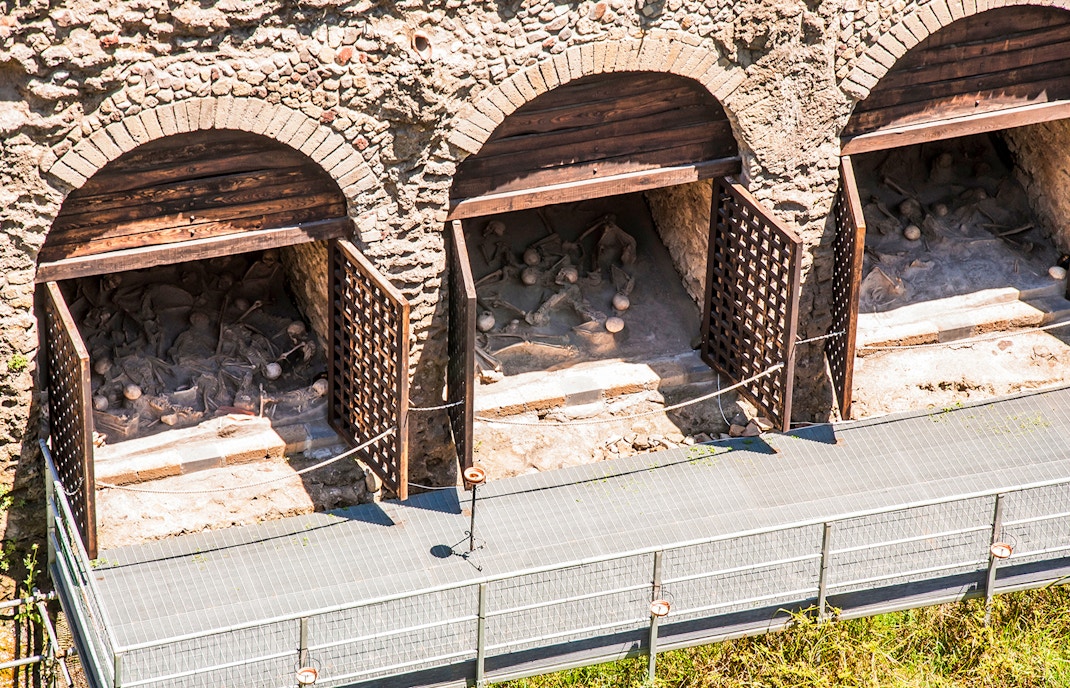
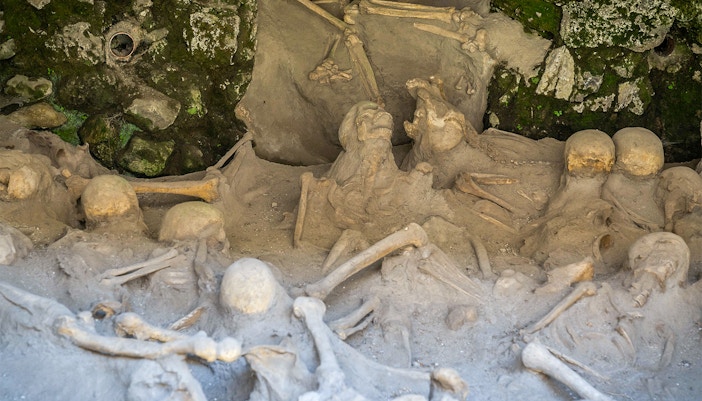
  • 1982: In a first, skeletal remains are found in the Herculaneum boat houses. 
  • 1997: Herculaneum becomes a UNESCO World Heritage Site
  • 2001: Herculaneum Conservation Project spearheaded by Cambridge University professor Andrew Wallace-Hadrill takes off, and many more discoveries of the ancient town are brought to light.

Detailed Herculaneum history

The beginnings

6th century BCE to 89 BCE

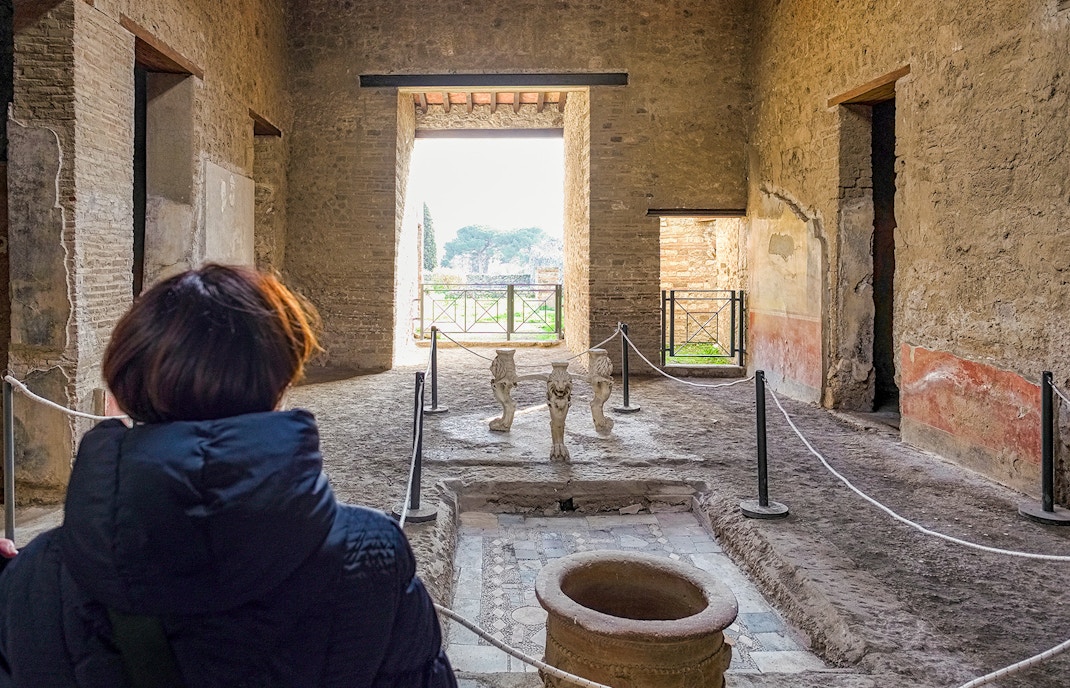
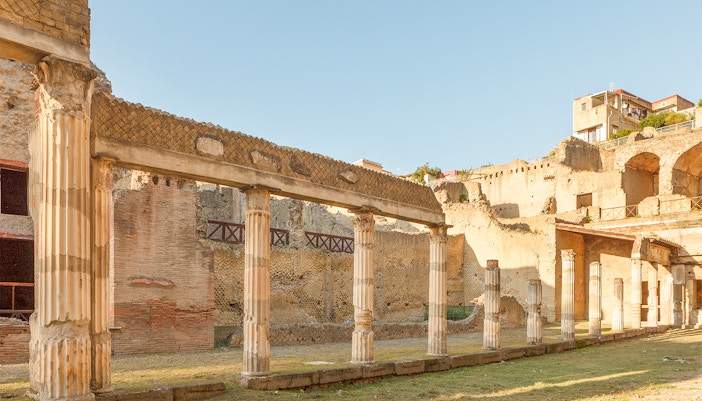
In the beginning, Herculaneum changed quite a few hands, moving from the Oscans (an Italic tribe belonging to Campania and Latium), to the Greeks, the Samnites (another Italic settlement between the Latins and the Greeks), and finally the Romans in 89 BCE. Herculaneum, as it was discovered, showed all the trademark features of a flourishing Roman town. This included lavish villas, baths, public houses, a gymnasium and more.

The turning points

62-79 AD

In 62 AD, a violent earthquake ripped through Herculaneum, destroying structures like the theater. However, reconstruction efforts were quickly put in place. Residents were unaware that this was a sign of burgeoning volcanic activity. In 79 AD, Mount Vesuvius erupted in what is considered one of the worst outbursts in its career. The pyroclastic flows that surged down its flanks entombed Herculaneum in more than 70 feet of ash.

Know more about Herculaneum and Vesuvius

Rediscovery

1709

Ambrogio Nocerino, a farmer in the present-day town of Ercolano, stumbled upon marble fragments while digging a well. News of this soon reached the Austrian commander Prince d’Elbeuf, who carried out further excavations of what was recognized as the Herculaneum theater. He carried away busts and marble statues to decorate his home.

More digging

1738-1750

Under the reign of King Charles Bourbon, excavation was continued, although crudely — lateral tunnels were drilled into the theater and other structures, resulting in the damage of several frescoes and stucco work. When Karl Weber took over in 1750, excavation took on a more scientific turn. But a lot was still left to be desired in terms of approach and technique.

The revival of excavation under King Francis

1828

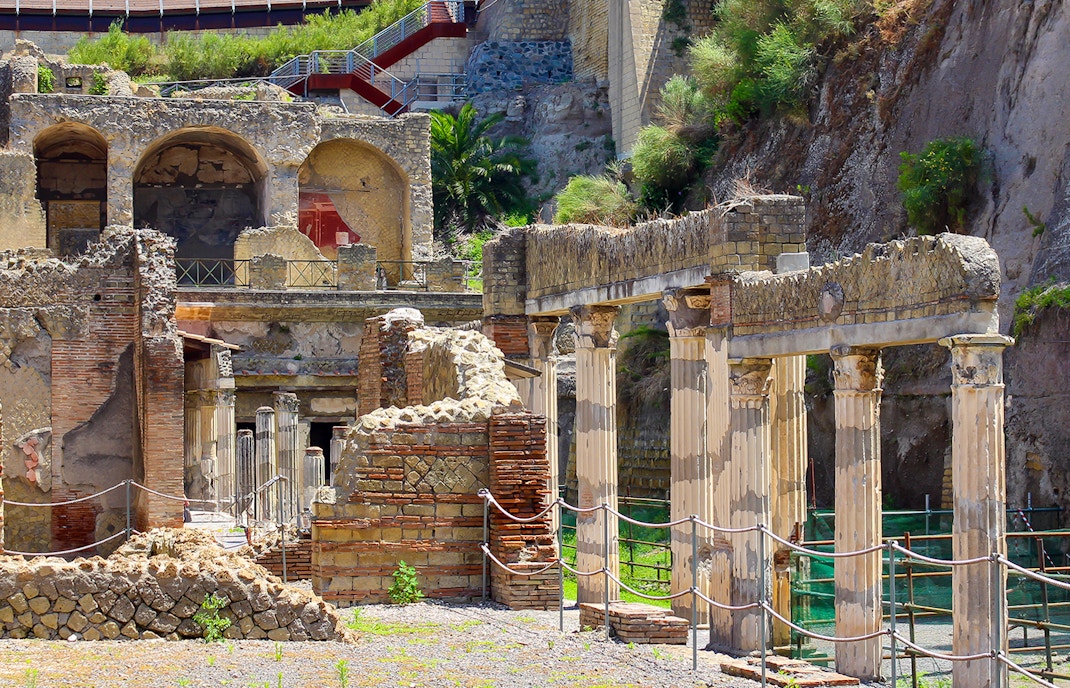
King Francis I renewed excavations at Herculaneum, uncovering structures like the House of Argus and House of the Skeleton. Herculaneum began to have an open-air museum appearance, but in 1837, funding for the excavation was diverted to the Amphitheater of Pozzuoli.

Amedeo Maiuri takes charge

1924-1961

It was under Maiuri’s tenure and aegis that Herculaneum truly began to shine. Interestingly, most of his excavations were sanctioned during the Mussolini regime. His vision was clear: the remnants of Herculaneum should be left in situ (on site), and be restored to their original condition wherever possible. This manner of approaching Herculaneum with sanctity was a welcome and lauded change.

An astonishing find: Herculaneum bodies

1982

Until this point, archeologists believed that Herculaneum residents had the foresight to evacuate before things went south — which is why they couldn’t find any mortal remains. Imagine their shock in 1982 when they found around 300 skeletons near the boathouses by the shore — huddled together in various states of despair and desperation. It is assumed that they were trying to flee via the oceanic route, but the heat got to them before they could escape.

Read more about Herculaneum bodies

Modern times

1997 - present

After receiving the UNESCO World Heritage status in 1997, the world began to sit up and pay closer attention to Herculaneum. Professor Andrew Wallace-Hadrill is an instrumental figure in present-day conservation efforts of Herculaneum. Scores of people now flock to Herculaneum to appreciate the exceptionally-preserved ruins and pay tribute to the ones that tragically lost their lives in 79 AD.

Herculaneum conservation

Efforts

The Herculaneum Conservation Project, a collaboration between Italian authorities and the David Packard Institute, plays a vital role in ongoing conservation efforts. It is led by Professor Andrew Wallace-Hadrill, a professor in the Classics department of Cambridge University.

Constantly monitoring temperature, humidity, and other environmental factors is crucial to prevent damage to the delicate ruins. Sophisticated systems track these conditions and ensure a stable environment for the exposed structures.

Careful excavation techniques are employed to minimize damage and ensure the safety of workers. New technologies like laser scanners and 3D modeling are used to document and analyze the site before, during, and after excavation.

Challenges

Water infiltration is a major threat, as it can cause erosion and damage to the volcanic ash and debris preserving the city. Drainage systems and careful water management strategies are essential to protect the ruins. Of course, climate change is another major threat to frescoes and fragile paintings.

The region experiences occasional earthquakes, which can pose a risk of structural collapse for already weakened buildings.

Moreover, excavating Herculaneum further is a delicate task as so much has been built above it — the neighboring towns of Ercolano and Portici have settlements above the ancient town. Digging further would mean that existing houses and buildings will have to be demolished.

Herculaneum today

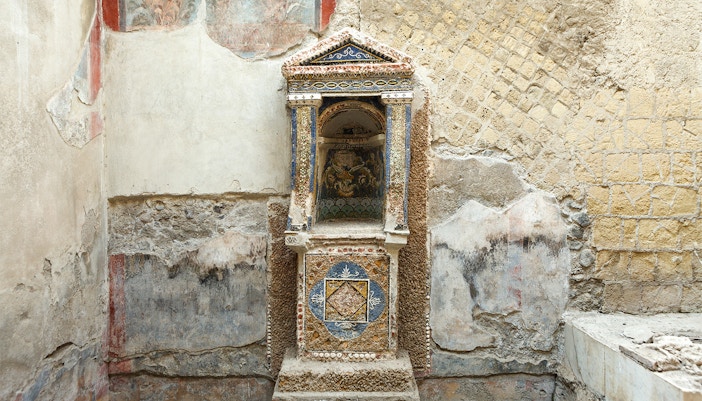
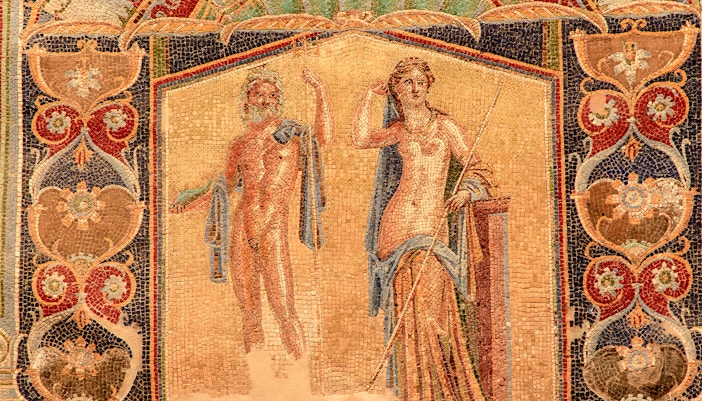
Much of what we see of Herculaneum has been a labor of love — frescoes, statues and busts have been painstakingly reconstructed to return them to their original state as much as possible. Without the efforts of Amedeo Maiuri, Andrew Wallace-Hadrill and their team, Herculaneum would long have been left to suffer an ignominious fate at the hands of vandals and thieves.

Although 75% of the town still lies undiscovered, what we see today has been protected as part of the Archeological Park of Herculaneum.

Visit Herculaneum

Book Herculaneum tickets

Herculaneum Timed-Entry Tickets

Book now, pay later
Flexible duration
Audio guide
Guided tour
Transfers available
Pickup available

Herculaneum Guided Tour with an Archaeologist

Free cancellation
Book now, pay later
2 hr.

Combo (Save 8%): Pompeii + Herculaneum Tickets

Herculaneum Timed Entry Tickets with Round-Trip Transfers

Free cancellation
Book now, pay later
3 hr. 45 min.
Transfers available

Frequently asked questions about Herculaneum history

Before the eruption of Vesuvius, Herculaneum was a well-to-do seaside port that housed Romans of nobility. Lavish villas, marble statues and intricate frescoes decorated its public landscape. After the eruption in 79 AD, this wealthy town was buried under several layers of ash and was forgotten for centuries. It was only over the last 300 years that bits of the ancient town were excavated and appreciated for its remarkable preservation of ancient Roman life.

More reads

Bodies

Book Now

Herculaneum and Vesuvius

Book Now