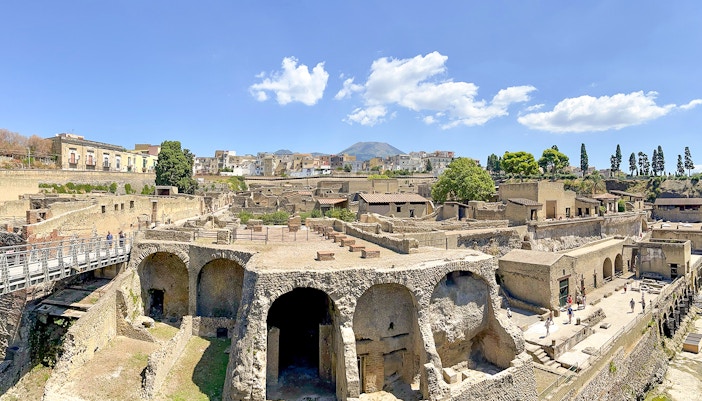
Visit a UNESCO-listed ancient fishing town caught between a gulf and a volcano, and then climb that very volcanic mountain to peer at craters and panoramas.
Herculaneum & Vesuvius | A match (not) made in heaven
Why combine the Herculaneum & Mount Vesuvius experience?
Get two perspectives
A balanced experience
Retrospect amidst the ash-baked remnants of a Roman city in the archaeological excavations of Herculaneum, and bask amidst vineyard-filled slopes 1000-meters above sea level.
And the neighborhood convenience
With round-trip transfers from Naples and a simple combo booking, cut down on logistics and get more time to explore each geographically unique site.
Booking guide
What’s the best way to go about it?
1. Buying individual tickets
Best for those who have already booked/visited either one site. Simply book a ticket with an optional multilingual audio guide, and add on transfers from Naples.
2. Booking combos
Best for those who want a simplified visit, where both sets of tickets and maybe even your transport is completely sorted in just one booking.
If you’d like a vantage of both Herculaneum and Mount Vesuvius from one spot, head up *Posilippo Hill* in Naples.
Making the most of your experience
- Most combo trips or tours usually start with Herculaneum, and then take you to Vesuvius. Climbing Mount Vesuvius in the second half of the day gives you a chance to catch the sunset beset by panoramic views.
- The Herculaneum Archaeological Area and Vesuvius National Park – from entrance to entrance, are just 3km or an 8-minute drive apart. However the drive right inside Vesuvius can stretch 13km and take up to 25 minutes.
- You can choose tours starting at either Naples, Pompeii, or Herculaneum. Customize your experience as per your interests. Visit just Herculaneum and Vesuvius, or see the big picture by including a visit to Pompeii.
The Herculaneum and Vesuvius experience in moments
🌅Morning
Wander through the hauntingly preserved streets of Herculaneum, frozen in time by ash and lava.
🌄Afternoon
Hike up Mount Vesuvius and peer into the crater that changed history—panoramic views included.
🎑Evening
Unwind with local wine and stories from the day, the shadow of the volcano still looming in golden twilight.
Interesting facts about Mount Vesuvius
- Official name: Mount Vesuvius
- Region: Campania
- Geological age: 300,000-400,000 years
- Height: 4200 ft (1,280 m)
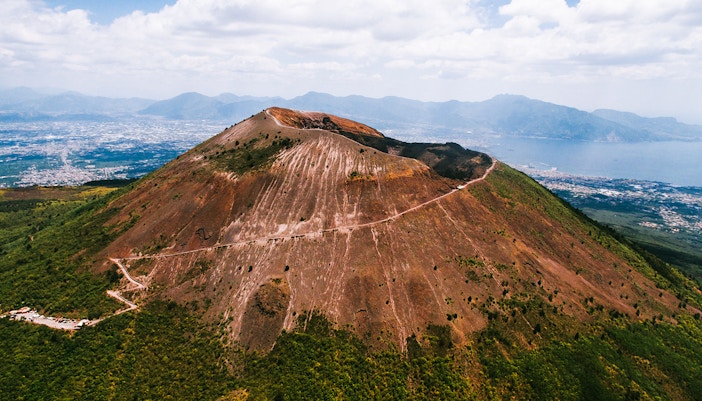
- Mountain type: Stratovolcano, known for its steep slopes and conical shape, built up from layers of lava, ash, and rock fragments.
- Status: Active
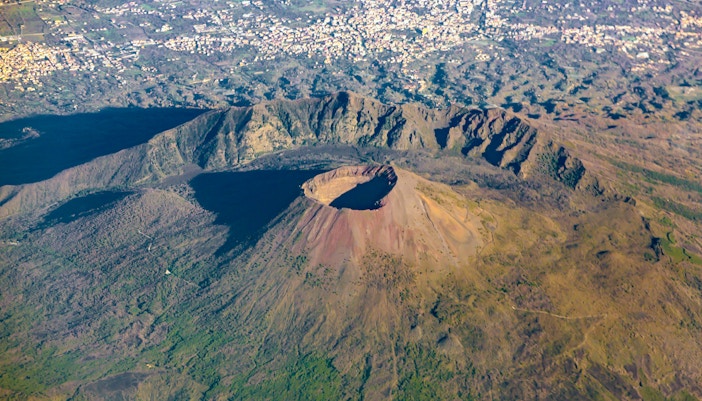
⛰️Mount Vesuvius is part of a geological complex. Mount Somma is the older, larger structure considered the base or caldera of Vesuvius.
🌋Vesuvius is the younger, active cone that has grown within Somma over centuries. Eruptions originate from this cone, the last of which was in 1944!
🕳️A distinguishing feature of Vesuvius is the central crater at its summit, a large depression formed by past eruptions. Evidence of previous eruptions can be seen in the layers of volcanic ash, rock fragments, and debris blanketing the volcano's flanks.
The intertwined history of Herculaneum and Vesuvius
At the start of the Common Era, Herculaneum was a fishing town nestled on the Bay of Naples, thriving as a bustling settlement with Oscan, Etruscan, Samnite, and Greek influences during the height of the Roman Empire. The port city’s strategic location facilitated trade and cultural exchange, contributing to its wealth and diversity.
Towering ominously on the horizon, Vesuvius is one of the most active volcanoes in Europe, situated in close proximity to Herculaneum. The people living at the foothills of Mount Vesuvius did not know that they were living in the dangerous shadow of an unpredictable volcano.
While they were aware that the mountain frequently fumed and showed evidence of fire, they believed that the volcano was a gateway to the underworld, or the forge of Vulcan, god of the blacksmiths. In fact, the earthquake of 62 AD (that destroyed several structures in Herculaneum including its theater) was a harbinger of what was to come.
The Bay of Naples is the most unsteady volcanic region in the Mediterranean, but 2000 years ago, knowledge of volcanology was non-existent. People were more likely to attribute seismic activity to the wrath of gods. Its historic eruption in 79 AD not only obliterated Herculaneum but also devastated Pompeii and several other nearby settlements.
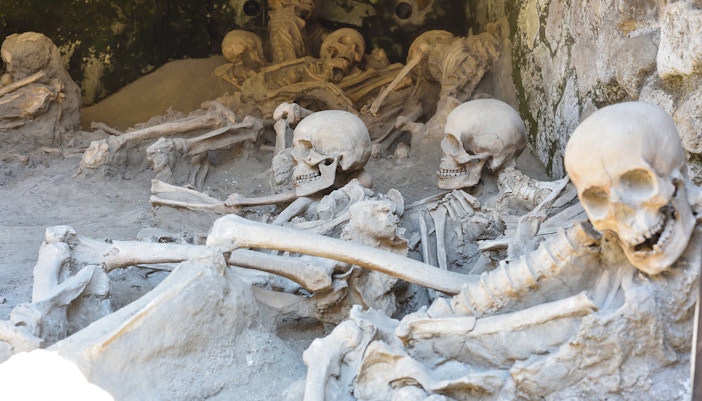
The volcano spewed a massive column of ash, pumice, and volcanic gases into the atmosphere, blanketing the towns in a thick layer of debris. The intense heat and pyroclastic surges — a series of superheated clouds of ash and gas that reach incredibly high temperatures, exceeding 500°C (932°F) — engulfed Herculaneum, preserving the town and its citizens in a state of eerie suspended animation.
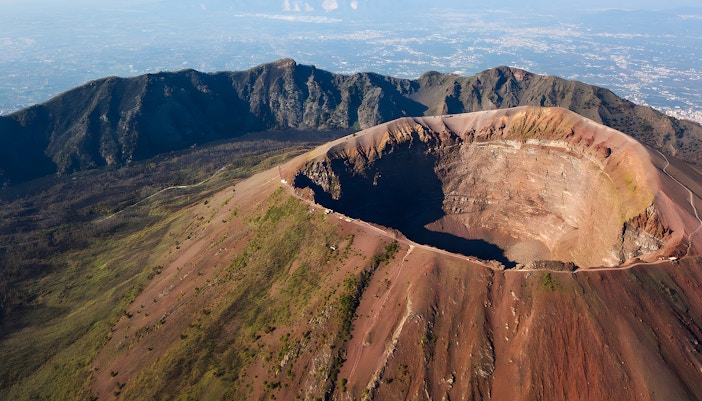
While Vesuvius is still considered active, and the last eruption occurred just six months after WWII Allied forces invaded Italy, millions of people continue to live in this region, largely due to the fertility of volcanic soil. Acres of vines, tomatoes and other crops dot the landscape, and residents of the present day are willing to live under constant risk.
Is it safe to visit Mount Vesuvius?
Italian authorities have a well-established plan for monitoring volcanic activity and issuing warnings in case of an eruption. With proper precautions and adherence to safety guidelines, visiting Mount Vesuvius can be a safe and rewarding experience.
Access to the crater rim is often restricted based on volcanic activity levels. Marked trails are designated for ascending the volcano, and visitors must stay on these designated paths. However, before your visit, check the latest information on Vesuvius' activity level and any access restrictions.
Getting to Mount Vesuvius from Herculaneum

From the Ercolano Scavi train station at Herculaneum, you can cross over to the Vesuvio Express ticketing station and purchase a shuttle bus ticket for about €22 — which includes both the bus fare and entry to the Mount Vesuvius National Park. The shuttle takes you right to the ticketing office at Mount Vesuvius, from where you can begin your hike to the crater.
If you’re driving from Herculaneum, take the A3 Napoli-Salerno highway to the Herculaneum exit, and follow Google maps to Vesuvio. However, note that the car park is located below the ticketing office and the climb is steep, so book a shuttle service from here to conserve your energy for the hike!
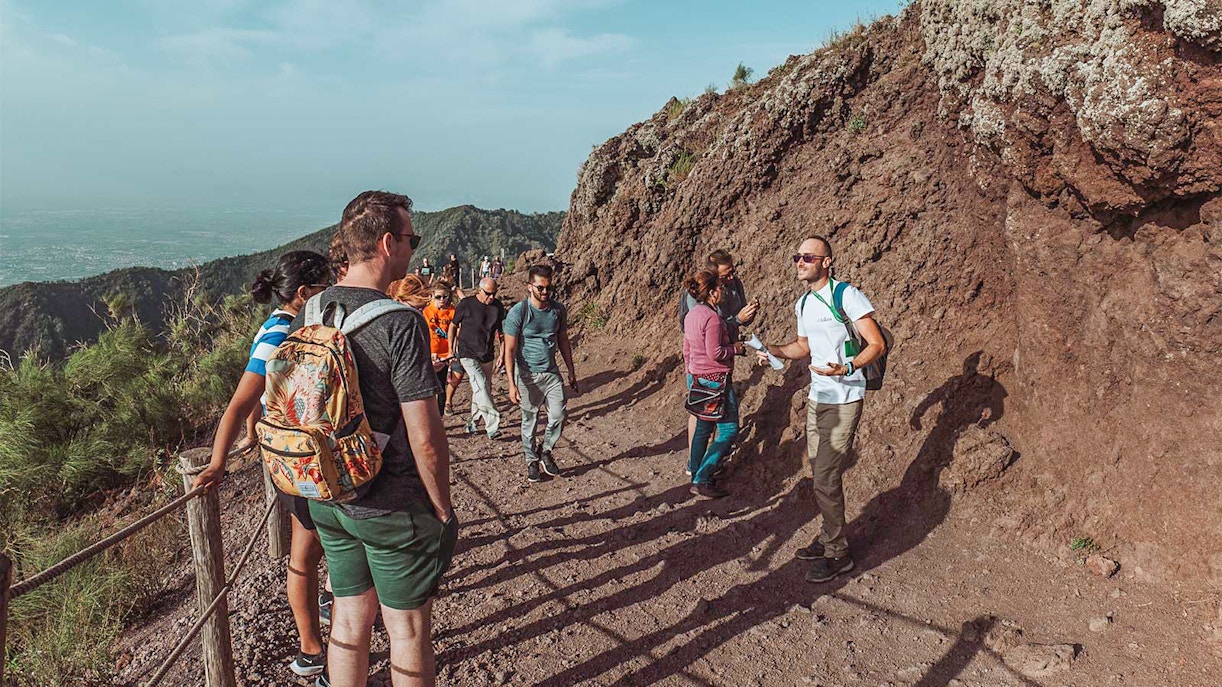
- With convenient transfers, it's possible to visit Herculaneum and Mount Vesuvius on the same day, with the starting point being Naples or Pompeii, depending on the option selected.
- Over a 6-8 hour trip, explore both these sites at your leisure. At Vesuvius, make sure you hike up to see the crater.
Recommended tours
- From Pompeii/Naples: Pompeii, Herculaneum & Vesuvius Day Trip
- From Pompeii/Naples: Vesuvius and Herculaneum Tour
Exploring Mount Vesuvius
November-December-January-February: 9am to 3pm
March to October: 9am to 4pm
April-May-June-September: 9am to 5pm
July-August: 9am to 6pm
Note: In case of predicted volcanic activity or bad weather, the volcano may be closed to visitors.
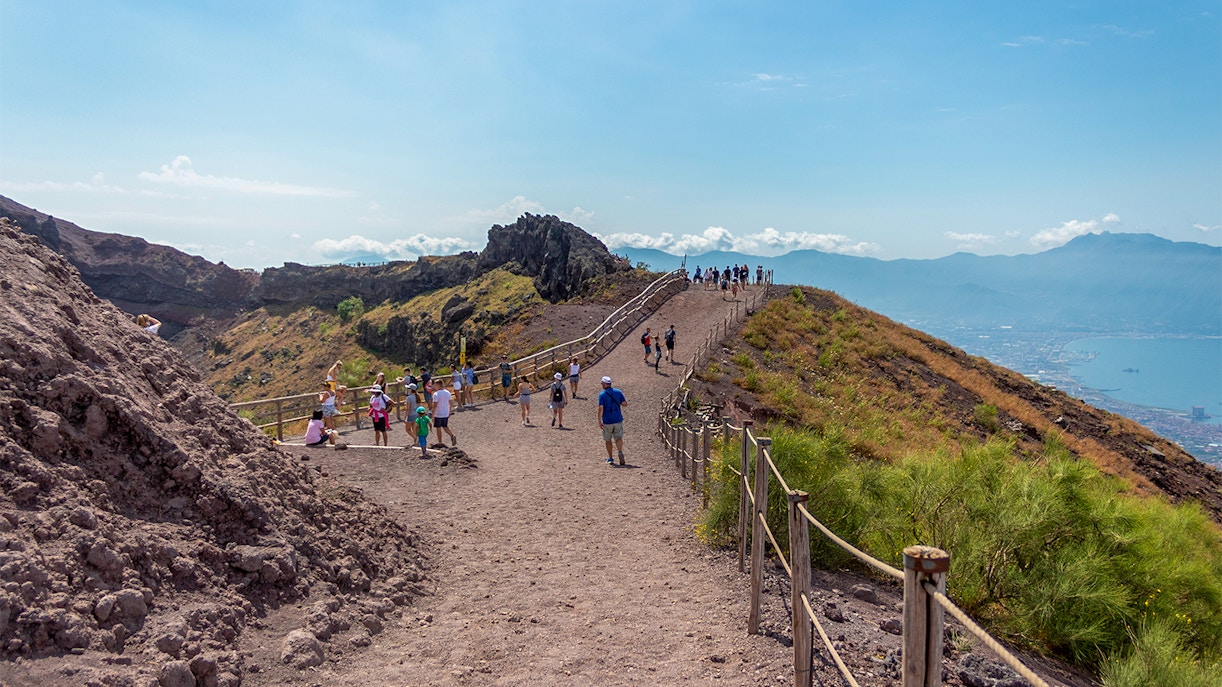
- Starting Point: Mount Vesuvius ticket gate
- Distance: 4 km
- Duration: 2 hours
- Difficulty level: Easy
This is a fairly easy hike to the summit with a few inclines. Note that this is one of the easiest treks, although other route options are available if you're looking for a more challenging hike.
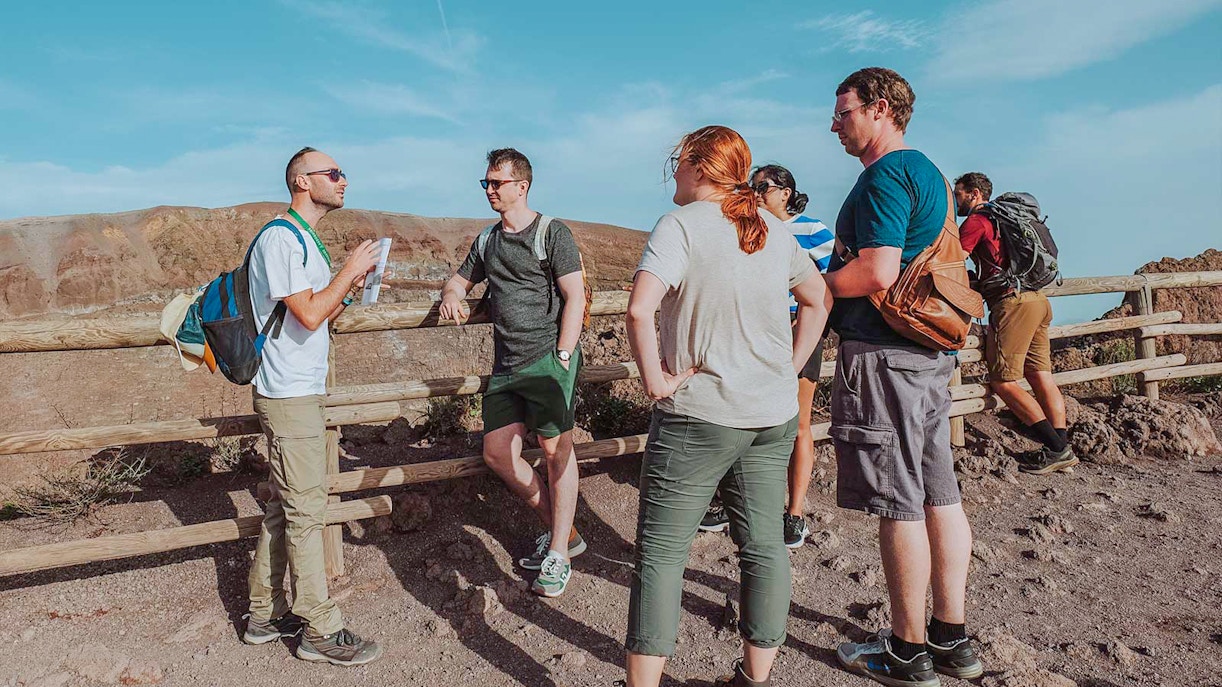
A volcanic guide will be there to assist you on your climb. They will be able to tell you about the significance of the region, vegetation, insights on volcanic activity and geology, etc.
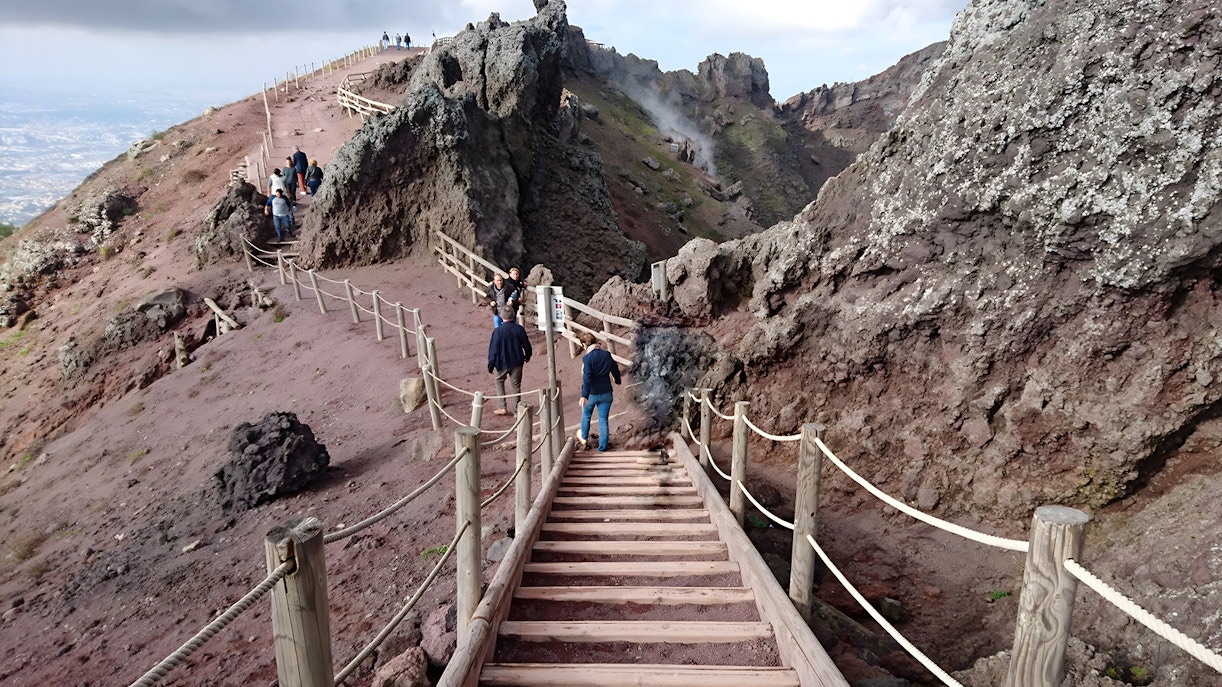
- The best way to ensure a safe and enjoyable hike up Mount Vesuvius is to go with a guide. Guides can provide you with information about the volcano, as well as help you navigate the trail.
- The weather on Mount Vesuvius can change quickly, so it's important to check the forecast before you go. Don't attempt the hike if there is a chance of rain, thunderstorms or high winds.
- There are a number of rules in place to help keep visitors safe on Mount Vesuvius. These rules include staying on the marked trails, not going off the trail to explore the crater and not littering.
- Keep an eye on what the geological department has to report about Mount Vesuvius' activity. It is still an active volcano, so be up to date with the status of volcanic activity.
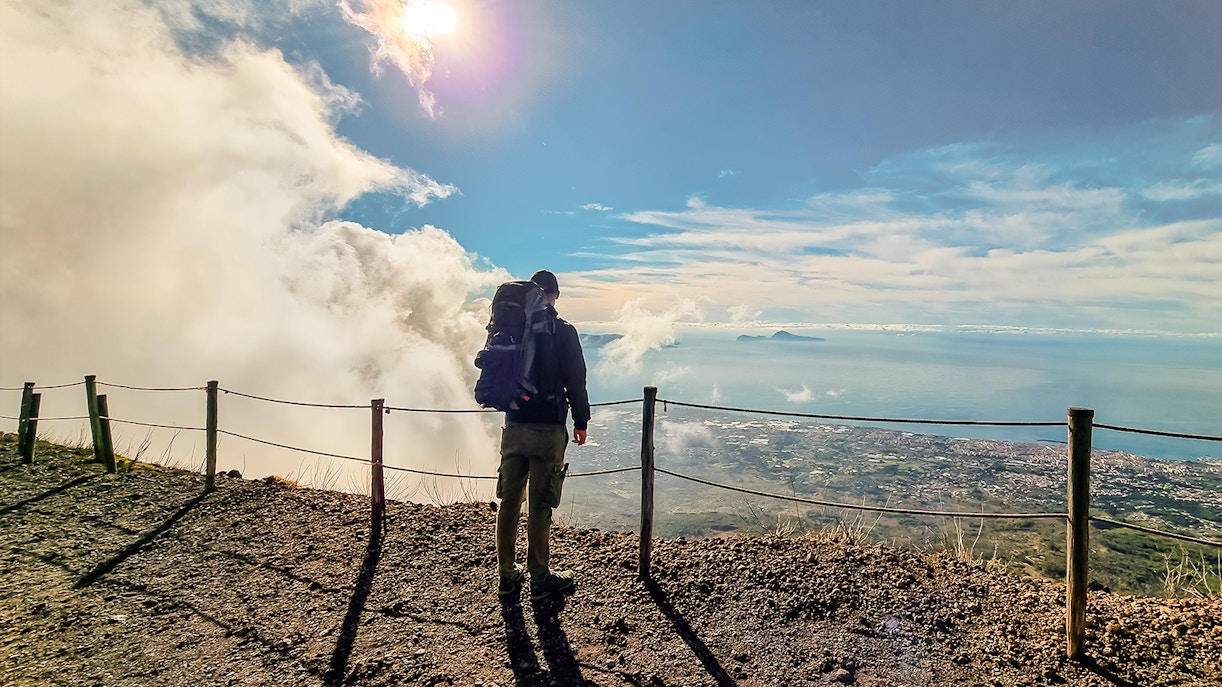
- The panorama from the summit is unbeatable. Besides the crater, you'll have a panoramic view of the beautiful Bay of Naples to the west. The city of Naples itself is spread out along the coast, and you can also see the islands of Capri and Ischia in the distance. You can also spot Pompeii and Herculaneum.
Frequently asked questions about Herculaneum and Mount Vesuvius
Mount Vesuvius is about 13 km away from Herculaneum, located across the Bay of Naples. Herculaneum lies west of the volcano.
To explore both Herculaneum and Mount Vesuvius in one day, it's best to start early. Begin your day with a visit to Herculaneum, as the archaeological site typically takes about 1.5 to 2 hours to explore. Afterward, head to Mount Vesuvius, which takes about 30 minutes by car from Herculaneum. The hike up the volcano can take another 30 to 45 minutes, depending on your pace. This allows you to experience both locations without feeling rushed.
The best way to combine both activities is to book a guided tour or day trip that covers both locations. Many local tour operators offer packages that include transportation and a knowledgeable guide for both Herculaneum and Mount Vesuvius. This way, you can focus on enjoying the experience without worrying about logistics.
It would have been very difficult to wade through the layers of ash and debris spewed by Vesuvius, and lack of technological advancement in those days would have made rebuilding the town an impossible task. Further, the live burial of thousands of people may have deterred people from entering it, perhaps leading them to think of these sites more as burial grounds.
No, the ancient town of Herculaneum has no official residents. While Herculaneum lies in excavated ruins — and not even all of it has been fully excavated — the towns of Ercolano (formerly known as Resina) and Portici are built above it. This is also what makes excavating Herculaneum a challenging task, as present-day settlements will have to be demolished to gain access to the buried town.
Taking a tour of Vesuvius is highly recommended as visiting the volcano is sure to enhance your understanding of the terrain, tragedy, etc. Usually, both sites can be visited on the same day as they’re only 30 minutes away from each other by road.
It's definitely feasible to visit both in one day, especially if you're comfortable with a moderately busy itinerary. However, if you prefer a more relaxed pace, dedicating a full day to each site would allow you to immerse yourself fully in the history of Herculaneum and the natural beauty of Mount Vesuvius without feeling rushed.
Although people were not adept at reading Vesuvius’ clues, it was evident (in hindsight) that an eruption was imminent. Besides the earthquake of 62 AD, there were also frequent home repairs being conducted across Pompeii and Herculaneum — in fact, painters in Herculaneum abandoned repair work half-way through the eruption to take cover.