Life in technicolor: Herculaneum frescoes and mosaics up close

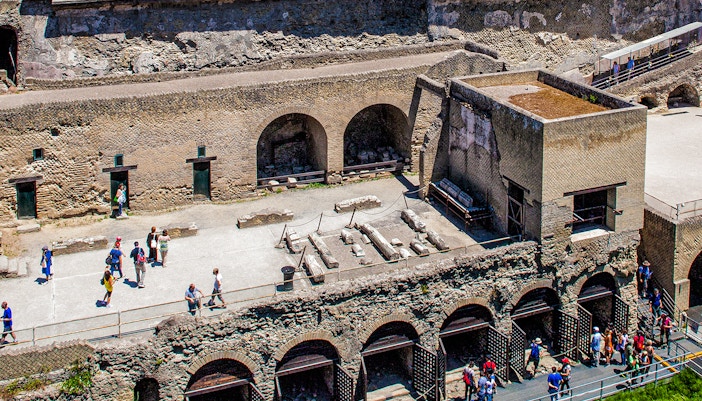
Herculaneum was a peaceful seaside town in the Bay of Naples, smaller in size to Pompeii, but wealthier and more prosperous. Its inhabitants were engaged in fishing, trade and other maritime activities. It was nestled in the innocent shadow of Mount Vesuvius, until violently and without warning, the volcano erupted in 79 AD. Life abruptly came to a halt, and the successive pyroclastic flows that engulfed the town simultaneously destroyed and preserved its buildings, shops and public spaces.

Among the items that were remarkably preserved were frescoes and mosaics dotting lavish villas and residences. Visit Herculaneum today, and you can still see impressive wall art adorn the houses. Get ready to behold frescoes and mosaics in all their richness and significance!

How were Herculaneum frescoes and mosaics discovered?

After chancing upon Herculaneum in the 18th century, the Bourbon dynasty went on a plundering spree to decorate their palaces with statues, busts and sculptures. When they found frescoes, many of them were hacked away and destroyed. Some others were placed in the royal palace, and later shifted to the Naples Archeological Museum.

Now, the frescoes seen at Herculaneum are carefully restored with meticulous preservation techniques with the help of research chemists, artists and other experts.

The making of Herculaneum wall and floor art

Frescoes

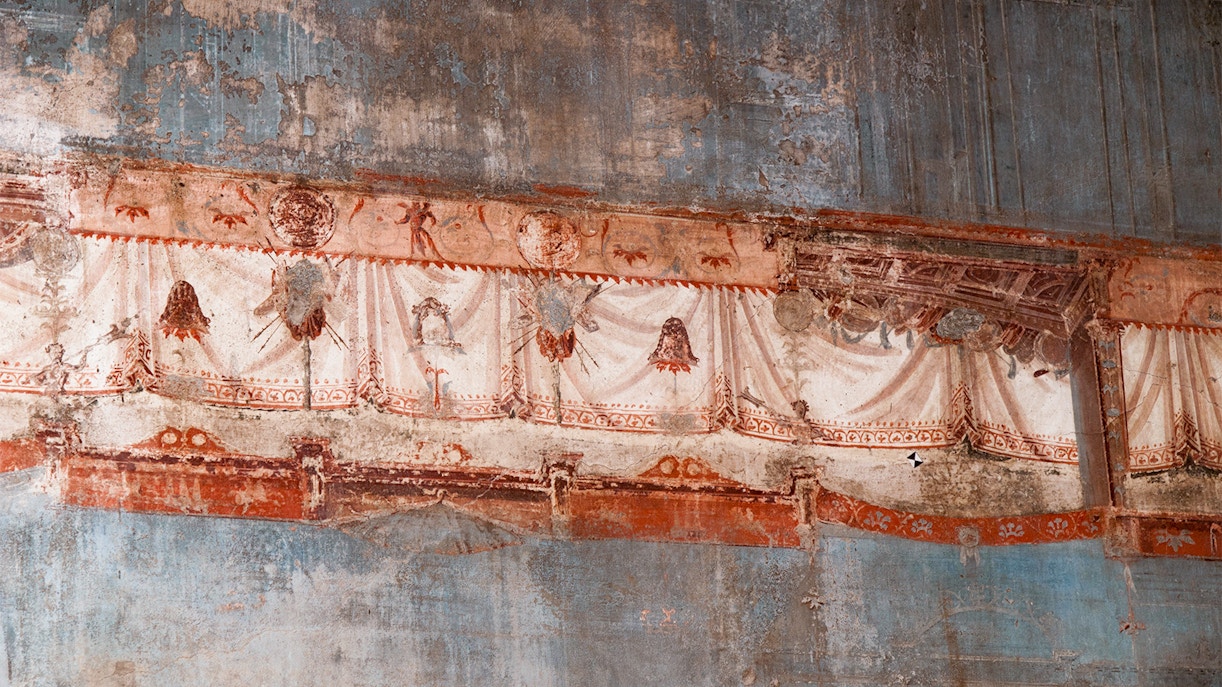
The art of fresco involves applying paint and pigment on wet plaster. This plaster can comprise a mixture of slaked lime, wet sand and crushed marble to offer a fine finish. Once this mixture is semi dry, depressions, carvings and molds can be made to create door frames or elaborate ceiling motifs. This technique is called stucco.

Before this mixture is fully dry, incisions are made to create the outlines of the artworks. Paint is then filled in to create the final fresco. After the fresco is dry, a second coat of plaster is applied in pastel colors to add definition to the painting.

Where are frescoes found in Herculaneum?

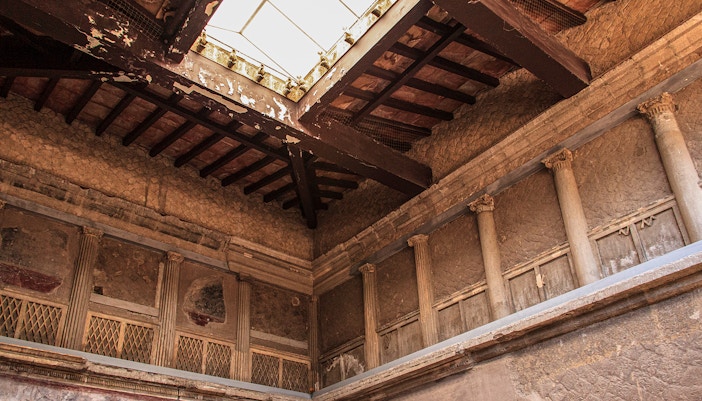
Frescoes are typically found in the walls of residences at Herculaneum, especially the atrium. Notable houses that unearthed a significant number of frescoes include Villa of the Papyri, House of the Relief of Telephus, the Samnite House, etc.
Mosaics

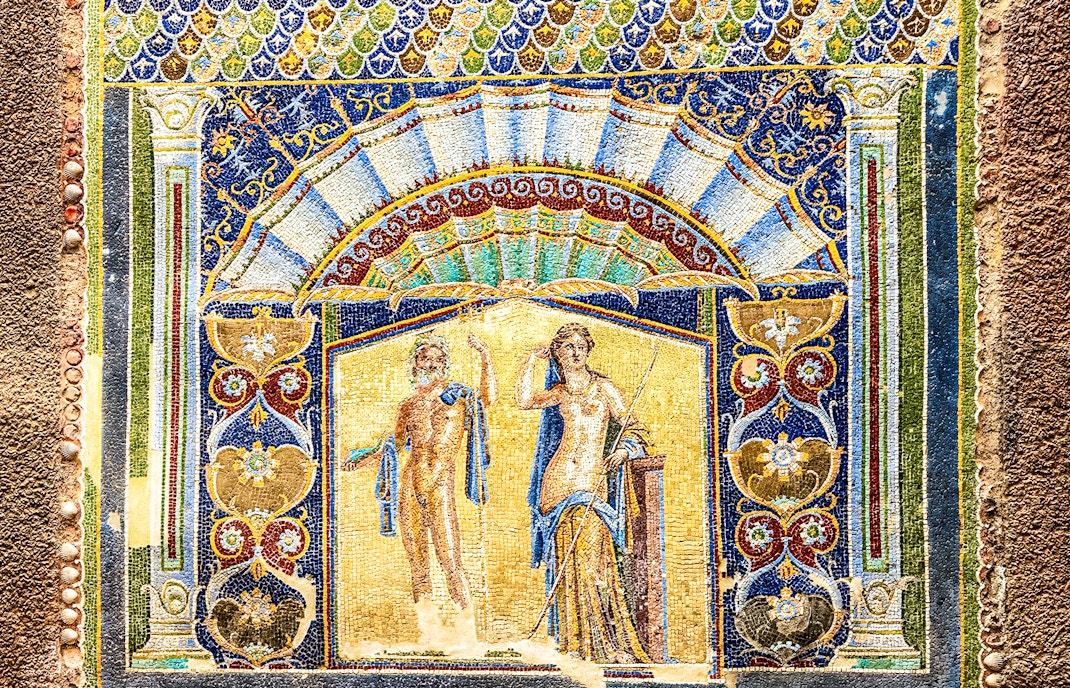
Mosaics are intricate and striking artworks created by arranging small, colorful pieces of marble, glass and stone, known as tesserae, into intricate patterns and images. These tesserae are then positioned to form scenes and geometric patterns on walls, floors, etc. In Herculaneum, these mosaics are found both in the residences as well as public spaces like the Thermal Baths. Ancient Roman mosaics were uneven and embossed, and occasionally even placed in different angles to catch the sunlight.

Where are mosaics found in Herculaneum?

Mosaics are found both in the walls and flooring of Herculaneum houses, typically again in the atrium since that was the portion of the house that received guests. To create impressive interiors, then, mosaics were strategically placed in the atrium. Famous mosaics in Herculaneum are found in the House of Neptune, the Thermal Baths, etc.

Common themes across Herculaneum frescoes and mosaics

Tourist observing Frescoes at Herculaneum

Many frescoes and mosaics found here are derived from Greek and Roman mythology. Popular figures include Hercules, Neptune, Achilles, Triton, Isis and more. These mythological characters also found themselves in sculptures and busts.

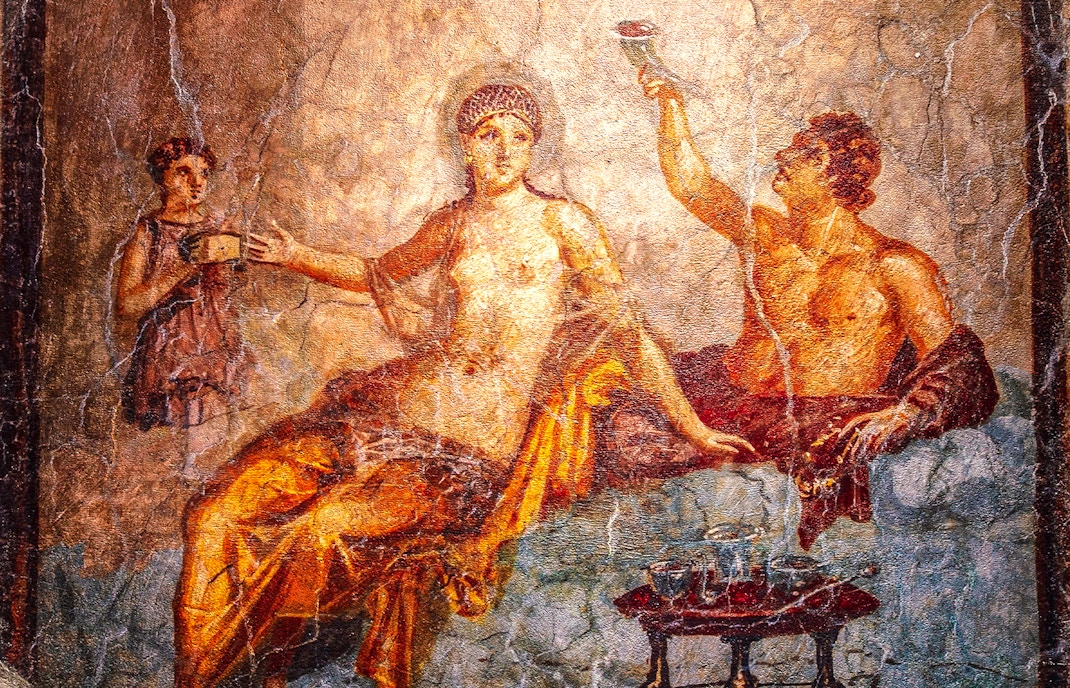
Another theme that was present across wall art were architectural and food themes. Many still lifes depicting fruit, animals, dining scenes, etc. were popular in Herculaneum. Ornate gateways and arches, decorative friezes, etc. demonstrated their preoccupation with architecture and fine living.

Appreciating the art works of Herculaneum

The frescoes often narrate moments from Roman mythology and history, while the mosaics ingeniously utilize tesserae to depict a wide range of subjects, from grand mythological tales to intricate geometric designs. Together, they serve as visual narratives that communicate stories, ideas and historical events.

Many of the frescoes are now housed in the Naples Archeological Museum, safe from vandals and the vagaries of the weather. Head over to the museum if you have the time to see these salvaged paintings up close.

Preservation of Herculaneum frescoes and mosaics

It’s important to remember that many of the frescoes on display today are works of careful restoration by skilled artists, chemists and researchers. While visiting, please refrain from touching any of these works of wall art as they are incredibly fragile and precious.

Preservation techniques include routine cleanup of art works, filling up of hollows with cement, using cotton swabs to unpeel layers of dirt and contaminants, and using laser technology to melt away foreign particles without disturbing the underlying paint.

Learn more about visiting Herculaneum

Frequently asked questions about Herculaneum frescoes and mosaics

Due to the successive pyroclastic flows that surged down Mount Vesuvius in 79 AD, the combination of volcanic ash and the absence of oxygen helped to slow down the decay process, preserving organic materials and delicate artworks. The pigments and stone work were entombed in the ash, preserving their color and constitution.

More reads

Villa of the Papyri

Book Now

Samnite House

Book Now